

Table of Contents
- How to Choose the Best Postpartum Abdominal Binder for Recovery
- Postpartum Abdominal Binder After C-Section: What to Look For
- Postpartum Belly Band Benefits and Risks: What the Evidence Shows
- How Long to Wear a Postpartum Belly Binder
- Postpartum Binder Sizing and Fit: Getting It Right
- Getting Your Binder Through Tricare: Authorization and Free Home Delivery
- Conclusion: Finding the Right Binder for Your Recovery
- Frequently Asked Questions
Last Updated: October 8, 2026
How to Choose the Best Postpartum Abdominal Binder for Recovery
Finding the best postpartum abdominal binder for recovery comes down to two things: adjustable compression and comfort against your skin for hours at a time. At General Home Medical Supply, we help new mothers sort through those details every week, and the difference between a binder you wear and one that ends up in a drawer usually comes down to fit, not brand.
A postpartum abdominal binder is a wide, adjustable belt worn around the abdomen after childbirth to provide external compression and support during early recovery. It is not a weight-loss tool, and it does not replace physical therapy or your doctor’s guidance.
Two features decide whether a binder actually works for you.
Compression Level and Adjustability
Adjustable compression matters more than maximum compression. Your abdomen changes size noticeably in the first two weeks after birth, and a binder with hook-and-loop panels or elastic side straps lets you loosen or tighten as swelling drops. Look for steady pressure without pinching at the ribs or hips. If you feel numbness, tingling, or shortness of breath, it is too tight, remove it and refit.
Fabric and Skin Comfort
Breathable fabric is not a luxury after birth. You may wear a binder for several hours a day, and heat rash or irritation under a non-breathable band is common. Soft elastic fabric with a cotton lining sits better against tender skin, especially near a healing incision. Avoid stiff, non-stretch material, it shifts when you sit or bend, which defeats the purpose.
Postpartum Abdominal Binder After C-Section: What to Look For
The best postpartum abdominal binder after C-section prioritizes incision support over aggressive compression. A cesarean birth leaves a healing surgical wound, and your binder needs to protect that area rather than press directly on it.
Incision Support and Protecting Your Scar
Look for a binder tall enough to cover the incision line with even, gentle pressure. Many C-section-specific binders use a wider front panel and softer edge binding to avoid rubbing the scar, and some include a removable cold pack pocket for swelling and discomfort. A key point most guides miss: your binder should sit below the incision, not on top of it, unless your clinician directs otherwise. Ask your OB or a postpartum nurse to show you the correct placement before you wear it home.
Wearing a binder too high, directly over a C-section incision, can irritate the scar and slow healing. Confirm placement with your care team before regular use.
Postpartum Belly Band Benefits and Risks: What the Evidence Shows
Belly bands offer real comfort and modest support, but they are not a recovery cure. Many clinicians view them as a helpful adjunct to rest, gentle movement, and pelvic floor care, not a substitute for any of those.
What a Binder Can and Cannot Do
A binder can:
- Reduce the pulling sensation when you stand, cough, or lift
- Support the abdominal wall after C-section or vaginal birth
- Provide gentle compression that some mothers find eases swelling and discomfort
- Improve mobility and stability during the first weeks
A binder cannot:
- Heal diastasis recti on its own
- Replace pelvic floor physical therapy
- Flatten your stomach permanently
- Substitute for clinician guidance after a complicated birth
Some mothers notice increased pressure on the pelvic floor when a binder is too tight. If you feel heaviness, leaking, or new pain, loosen the binder or stop using it and talk to your provider.
Wear your binder during activity and remove it for rest. Constant all-day compression is not the goal; support when you are upright and moving is.
How Long to Wear a Postpartum Belly Binder
Most mothers wear a postpartum belly binder for short stretches during the first two to six weeks, building up gradually rather than starting with all-day wear. Your clinician’s guidance should set the actual timeline, especially after a C-section.
The goal is not maximum hours in the binder. It is support during the moments when your core is working hardest: standing up from a chair, walking to the bathroom, lifting the baby, coughing, or riding in a car over bumpy roads.
A practical starting schedule:
| Phase | Wear Time | Frequency |
|---|---|---|
| Week 1 | 1-2 hours | 2-3 times daily |
| Weeks 2-3 | 2-4 hours | 2-3 times daily |
| Weeks 4-6 | 3-6 hours | As needed for activity |
| Beyond week 6 | Only if clinician advises | As directed |
Start with short sessions and extend them as you tolerate the binder. Remove it any time you sleep, and check your skin daily for redness or irritation.
A Fit Check You Can Do in 30 Seconds
Before you commit to a wear session, run through this quick check:
- Slide two fingers under the top and bottom edges. If you cannot, it is too tight.
- Take a deep breath and sit down. If the binder digs into your ribs or hips, loosen it.
- Press a hand against your lower belly and cough gently. You should feel support, not a sharp pinch.
- After 30 minutes, check for numbness, tingling, or red marks that last after removal. Any of those mean the binder is too tight.
When to Take It Off and Call Your Provider
Remove the binder immediately and contact your care team if you notice:
- New or worsening pelvic heaviness, leaking, or a bulge sensation
- Shortness of breath, chest pain, or a rapid heartbeat
- Increased bleeding or a change in lochia color after wearing the binder
- Skin breakdown, blisters, or a rash that does not clear
- Pain that gets worse instead of better over the course of a day
These signs can point to excessive compression, a pelvic floor issue, or a healing problem that needs evaluation.
Adjusting as Your Body Changes
Your abdomen changes size noticeably in the first two weeks as swelling drops and your uterus shrinks back toward its pre-pregnancy size. A binder that felt snug on day three may feel loose by day ten. Recheck the fit every few days and tighten the hook-and-loop panels or side straps as needed. If your size is changing quickly, an adjustable binder with a wide range of overlap serves you better than a fixed-size wrap.
If you had a C-section, your incision location matters. A low transverse incision usually sits below the bikini line, so a binder that rides slightly above it can support the abdominal wall without pressing on the scar. A vertical incision needs a different placement conversation with your surgeon.
Check Your Insurance Coverage →
Postpartum Binder Sizing and Fit: Getting It Right
Correct sizing is the single biggest factor in whether your binder helps or hurts. Measure your waist at its widest point, usually at or just below the navel, and match that number to the manufacturer’s size chart rather than your pre-pregnancy size. If you are between sizes, size up and use the adjustability to tighten.
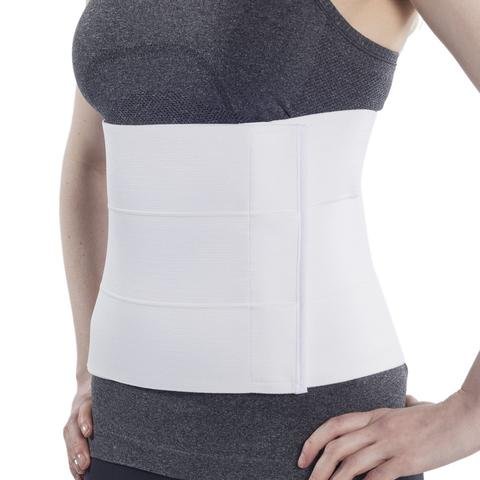
A Fit Check That Works for Different Body Shapes
A proper fit looks different on a size 4 frame than on a size 24 frame, and on a short torso versus a long one. Use these checks as a starting point, then adjust for your body:
- The binder sits smooth against your skin with no rolling at the top or bottom edge
- You can slide two fingers under the band without forcing them
- You can breathe deeply and sit down without the binder digging in
- No numbness, tingling, or red marks that last after removal
- The back panel stays in place when you bend forward to pick up the baby
If the binder rolls down when you sit, it is too loose or too short for your torso. If it rides up into your ribs, it is too long or too tight at the bottom edge. Neither problem is solved by tightening further.
Inclusive Sizing and Accessibility
Not every binder works for every body, and the differences matter more than most roundups admit.
Size range. Look for a binder that lists a waist measurement range, not just S/M/L.
Adjustability. Hook-and-loop panels and elastic side straps let you fine-tune compression as your body changes.
One-handed use. After a C-section or a difficult vaginal delivery, you may not be able to bend, twist, or use both hands comfortably.
Comfort while sitting, walking, and feeding. A binder that feels fine standing can dig in when you sit to nurse or pump.
Skin sensitivity. If you have sensitive skin, eczema, or a history of reactions to adhesives, look for a cotton lining or a seamless edge.
Durability and Care
A binder you wear daily for six weeks will need washing. Check the care label before you buy:
- Most hook-and-loop binders can be hand washed in cool water and air dried. Machine drying can warp the panels and degrade the fasteners.
- Elastic side straps lose stretch over time, especially with heat. Air drying extends their life.
- Fastener hooks can snag fabric in the wash. Close the hooks before washing, or use a mesh laundry bag.
- A binder that rolls, slips, or loses its shape after a few washes is not worth replacing every two weeks. Look for reinforced stitching and a fastener system that still grips after repeated use.
If you are not sure which size or style fits your recovery, ask your postpartum nurse or a physical therapist who works with postpartum patients. Their input is more useful than a size chart alone.
Getting Your Binder Through Tricare: Authorization and Free Home Delivery
If you have Tricare insurance, you should not have to chase paperwork while recovering from birth. General Home Medical Supply handles the entire authorization process for you, from confirming your prescription to working directly with your insurance, and we ship your breast pump and maternity back support straight to your home at no charge, with free shipping.
That means one point of contact instead of three. We coordinate with your doctor’s office for the prescription, submit the authorization to your insurance, and keep you updated until the equipment ships.
The authorization work happens on our side. You provide your prescription and insurance details, and we manage the rest until your equipment arrives at your door.
Conclusion: Finding the Right Binder for Your Recovery
Recovery looks different for every mother, and the right binder is the one that fits your body, supports your specific delivery, and stays comfortable long enough to actually wear. Start with adjustable compression and breathable fabric, confirm placement with your care team, and build your wear schedule gradually.
If you have Tricare and need a hands-free breast pump, a postpartum abdominal binder, or maternity back support, General Home Medical Supply can handle the prescription coordination, insurance authorization, and billing so you can focus on recovery. We ship directly to your home at no charge, with free shipping. Check your insurance coverage to get started.
Frequently Asked Questions
Are belly binders recommended after birth?
Many healthcare providers suggest a postpartum abdominal binder for comfort and support during recovery, especially after a C-section. Research shows they can help with mobility and reduce discomfort, but they are not a treatment for diastasis recti or a substitute for pelvic floor therapy. Talk to your OB or midwife about whether a binder fits your recovery plan.
How long should you wear a postpartum abdominal binder?
Most providers recommend wearing a binder for short periods during the day, such as a few hours at a time, and removing it before sleep. Many people use one for the first two to six weeks after delivery, but the right duration depends on your delivery type and healing. Follow your doctor’s guidance and take it off if you feel pain or numbness.
Can you wear a postpartum binder after a C-section?
Yes. A postpartum abdominal binder after C-section can support the incision, reduce pulling sensations when you move, and make it easier to get up and walk. Look for a soft, breathable fabric with adjustable compression that does not press directly on the scar. Ask your surgeon when it is safe to start wearing one.
How tight should a postpartum belly binder be?
A binder should feel snug but never restrictive. You should be able to breathe deeply, eat normally, and slide two fingers under the edge. If you feel numbness, tingling, or increased pain, it is too tight. Proper postpartum binder sizing and fit matter more than how much compression you can tolerate.