
Table of Contents
- How Long to Wear a Postpartum Belly Wrap Daily: The Short Answer
- How Many Hours a Day to Wear a Postpartum Belly Wrap
- When to Start Wearing a Postpartum Belly Wrap
- C-Section vs. Vaginal Birth: Adjusting Your Wear Plan
- How Tight Should a Postpartum Belly Binder Be?
- Can You Sleep in a Postpartum Belly Wrap?
- Warning Signs to Loosen or Remove Your Belly Wrap
- Getting Your Belly Wrap Through Insurance
- Frequently Asked Questions
Last Updated: October 16, 2026
How Long to Wear a Postpartum Belly Wrap Daily: The Short Answer
Most people should wear a postpartum belly wrap for a few hours a day at first, then build up slowly. A common starting point is two to three hours daily, working toward four to six hours during the early weeks after birth. The right amount depends on your birth, your comfort, and what your healthcare provider advises.
This guide from General Home Medical Supply covers daily wear time, when to start, how tight the band should feel, and when to take it off. We also explain how to get a belly wrap and maternity back support shipped to your home, with the insurance authorization handled for you.
If you have Tricare insurance and need a hands free breast pump, we take care of the paperwork. Our team requests all the authorization from your insurance and ships your breast pump and maternity back support to your home at no charge. Shipping is free.
There is no single correct number of hours. Start low, add time as you heal, and let comfort and your provider’s guidance set the pace.
A Wear Schedule by Postpartum Stage
A wrap is not a wear-it-all-day item. Think of it as a support tool you use in blocks, not a garment you live in.
| Stage | Typical Daily Wear | Notes |
|---|---|---|
| First week | 2-3 hours, in short blocks | Start gently, remove for rest |
| Weeks 2-3 | 3-4 hours total | Add time if it feels comfortable |
| Weeks 4-6 | 4-6 hours total | Often worn during activity |
| After 6 weeks | As needed | Many people stop or wear it only for support |
Many people find that shorter blocks work better than one long stretch. Put the wrap on for a walk, a feeding session, or chores, then take it off.
How Many Hours a Day to Wear a Postpartum Belly Wrap
The honest answer is that how many hours a day to wear a postpartum belly wrap varies from person to person. A range of four to six hours is common once you are past the first week. Some people wear it less. Others wear it a bit more during activity.
What matters more than the clock is how your body responds. If you feel pressure, pinching, or shortness of breath, the wrap is too tight or has been on too long.
A simple rule: wear it for support, not for constant compression. Take it off before you eat a large meal, before bed, and any time it starts to feel uncomfortable.
- Start with two to three hours on day one
- Add about an hour every few days if it feels fine
- Cap most days at four to six hours
- Remove it for sleep and showers
- Skip it entirely on days you feel sore or unwell
When to Start Wearing a Postpartum Belly Wrap
Most people can start wearing a wrap within the first few days after birth, once they feel ready. Some begin right after delivery with a provider’s okay. Others wait a day or two.
The key is to check with your healthcare provider first, especially after a C-section. Your provider knows your incision, your healing, and whether compression is safe for you right now.
A common mistake is rushing into tight compression on day one. Your body just did a lot of work. Give it a little time, then start gently.
Starting a wrap too tight, too soon can increase pain, press on your incision, and make it harder to breathe deeply. Ease in over several days instead.
C-Section vs. Vaginal Birth: Adjusting Your Wear Plan
Your birth changes your wear plan. A C-section means you have an incision to protect, so fit and timing matter more. A vaginal birth often allows more flexibility, but your body still needs time to heal. The table below outlines how to personalize your approach.
| Consideration | After C-Section | After Vaginal Birth |
|---|---|---|
| When to start | Wait for your provider’s okay, often 1-3 days after delivery | Usually within the first few days, once you feel ready |
| Fit | Softer binder that sits above or away from the incision | Standard wrap fit, snug but not tight |
| Daily wear | Shorter blocks at first, often 1-2 hours | Can often build up hours faster |
| What to watch | Incision redness, swelling, discharge, or increased pain | Soreness, swelling, or sharp pain |
| When to remove | Any incision discomfort or provider advice | Any pressure, pinching, or shortness of breath |
After a C-section: Many providers suggest a softer abdominal binder that sits above or away from the incision. You may start later and wear it for shorter blocks at first. Watch the incision for redness, swelling, or discharge, and stop if anything changes. Some people find that a binder helps them feel more secure when moving, but it should never press directly on the incision.
After a vaginal birth: You often have more freedom. You can usually start sooner and build up hours faster. Even so, listen to your body. Soreness and swelling are normal early on, but sharp pain is not.
For both: The goal is the same, gentle support that helps you move, not tight pressure that hurts. If you are unsure whether your wrap is safe for your birth type, ask your provider before you start.
Never wear a binder over an incision that is red, swollen, or draining without checking with your provider first. Compression can make some incision problems worse.
How Tight Should a Postpartum Belly Binder Be?
A postpartum belly binder should feel snug but never painful. You should be able to slide two fingers under the edge. You should breathe easily, sit comfortably, and move without pinching.
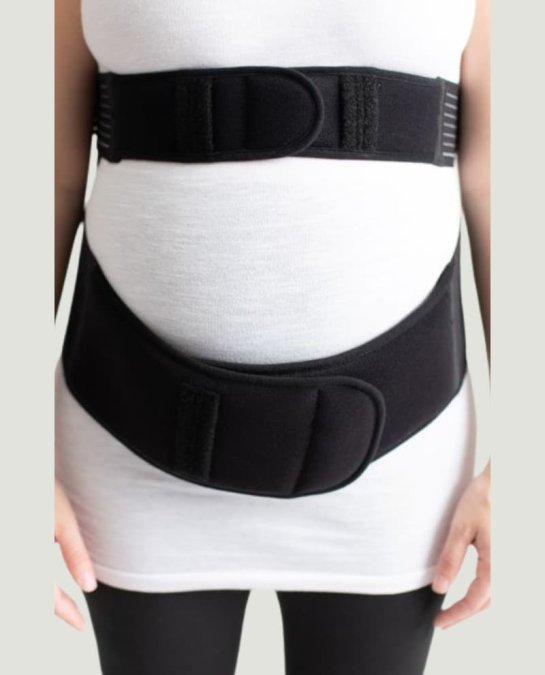
Fit is where most people get it wrong. They pull the band as tight as it will go, thinking more compression means more support. It does not work that way.
Signs your binder is too tight:
- You can’t take a deep breath
- You feel pressure in your ribs or pelvis
- Your skin is red, numb, or irritated
- You feel dizzy or short of breath
- The band leaves deep marks
If any of these happen, loosen the band or take it off. Adjust it in small steps, not big ones.
Check Your Insurance Coverage →
Put the wrap on while lying down or standing tall. Lying down helps you line it up evenly, and standing lets you check that you can still breathe and bend comfortably.
Can You Sleep in a Postpartum Belly Wrap?
Most people should not sleep in a postpartum belly wrap. Overnight wear is usually not needed, and it can press on your skin and ribs for hours.
If you want to wear it while resting, keep it loose and short. Take it off before you settle in for the night. Your body does its healing work while you sleep, and it does not need tight compression then.
Skip the wrap while sleeping if you have any of these:
- An incision that is still healing
- Skin irritation or numbness
- Trouble breathing when lying down
- A provider who told you to avoid overnight wear
Warning Signs to Loosen or Remove Your Belly Wrap
Take the wrap off right away if something feels wrong. Your body gives clear signals, and you should trust them.
Remove the wrap and call your healthcare provider if you notice:
- Shortness of breath or chest pain
- Sharp or worsening pain
- Redness, swelling, or discharge at an incision
- Numbness, tingling, or skin breakdown
- Dizziness or fainting
- A band that suddenly feels much tighter
These can be signs of a problem that needs medical care. Do not wait it out. Loosen or remove the wrap and get advice.
Never ignore numbness, tingling, or skin changes under a binder. Continued pressure on skin that is already irritated can lead to sores and slow healing.
Getting Your Belly Wrap Through Insurance
Getting a postpartum belly wrap, maternity back support, or a hands free breast pump through insurance can feel like a maze. General Home Medical Supply makes it simple.
Here is how it works:
- You share your insurance details and your provider’s prescription
- We request all the authorization from your insurance
- We coordinate with your doctor’s office on the paperwork
- Once approved, we ship your items to your home
- Shipping is free, and there is often no cost to you
If you have Tricare insurance and need a hands free breast pump, we handle the authorization from start to finish. We ship your breast pump and maternity back support to your home at no charge.
You do not have to chase forms or make endless calls. We deal with the billing and authorization so you can focus on you and your baby.
Tricare covered breast pump and maternity support information
Women’s Health guidance on postpartum recovery
MedlinePlus postpartum care overview
Recovery looks different for everyone, and the right wear plan is the one that fits your body and your birth. If you are not sure where to start, your healthcare provider can guide you on daily wear time and fit.
At General Home Medical Supply, we take the stress out of insurance-covered maternity gear. We handle prescription coordination, insurance authorization, and billing, then ship your breast pump and maternity back support straight to your door with free shipping and often no cost to you. Check your insurance coverage with us and get the support you need without the hassle.
Frequently Asked Questions
How long should you wear a postpartum belly wrap each day?
Most people wear a postpartum belly wrap for two to three hours at a time, adding up to about eight to twelve hours daily during the first weeks after birth. Start with shorter sessions and build up as you feel comfortable. Take it off before long stretches of rest, and never wear it so long that you lose track of how your body feels. Your healthcare provider can help you set a schedule that fits your recovery.
Is three months postpartum too late to start wearing a belly binder?
It is not too late, but the goals shift. In the first six to eight weeks, a belly band mainly offers abdominal support and comfort while your core muscles and uterus recover. After that window, it can still help with back support and posture during activity. Talk with your healthcare provider about whether continued use makes sense for your situation, and pair it with gentle core work when you are cleared for exercise.
Can you wear a postpartum belly wrap all day?
Wearing it all day is not recommended. Long, continuous compression can irritate your skin, restrict breathing, and mask pain that you need to notice. A better approach is to wear the wrap during activity and for a few hours at a time, then remove it for rest, meals, and sleep. If you feel short of breath, numb, or uncomfortable, loosen or remove the band right away.
Does a postpartum belly wrap help with a saggy belly?
A belly wrap provides abdominal support and may help you feel more comfortable and steady after birth, but it does not burn fat or permanently tighten skin. Visible changes to the belly come mostly from time, gradual uterine involution, and core strengthening once your provider clears you for exercise. Think of the wrap as a recovery aid for comfort and posture, not a fix for loose skin or muscle weakness.