

Last Updated: November 1, 2026
Quick Summary
The best back support for third trimester pregnancy is a maternity belt that lifts under the bump and shares the load with your hips and lower back, often paired with a lumbar brace for lower-back ache. Match the support to the activity that hurts, and wear it snug but never tight.
- Belly bands offer modest lift and little lower-back unloading, so they suit early pregnancy better than the third trimester.
- Position the belt’s lower edge under the belly on the hips, and check that two fingers slide under the straps.
- Take the belt off to sleep and rest, and loosen or remove it if you feel numbness, tingling, or deep marks.
- For pelvic girdle pain, wear a pelvic support garment low across the hips, often alongside a maternity belt.
- TRICARE members may get a maternity back support and hands-free breast pump shipped home at no charge with free shipping.
Table of Contents
- Why Third Trimester Back Pain Hits Differently
- Pregnancy Support Belt for Back Pain: What the Options Actually Do
- How to Wear a Pregnancy Support Belt Correctly
- Third Trimester Back Pain Relief Beyond the Belt
- Sizing, Fit, and Safe Wear: What to Check Before You Buy
- Using Tricare to Get Your Back Support and Breast Pump at No Cost
- Check Your Insurance Coverage for Maternity Support
- Frequently Asked Questions
Why Third Trimester Back Pain Hits Differently
Finding the best back support for third trimester pregnancy starts with understanding why the final weeks hurt more than the second trimester did. The answer is load and use. Your belly sits farther forward now, so your lumbar spine and hips work harder to keep you upright.
That is not a sizing failure. It is a physics problem. A maternity support garment has to lift the belly and share the load with your lower back, and the wrong type does one job while ignoring the other.
Pregnancy Support Belt for Back Pain: What the Options Actually Do
A pregnancy support belt for back pain is a garment worn under or over clothing that lifts the weight of the belly and transfers part of it to the hips and lower back.
Below is a comparison of the main support types by intended use and limitations. No garment treats the cause of pregnancy back pain; each manages load and discomfort while it is worn.
Belly Bands vs. Maternity Belts vs. Lumbar Braces vs. Pelvic Support Garments
Belly bands are simple stretch tubes that cover the bump and hold it close to the body.
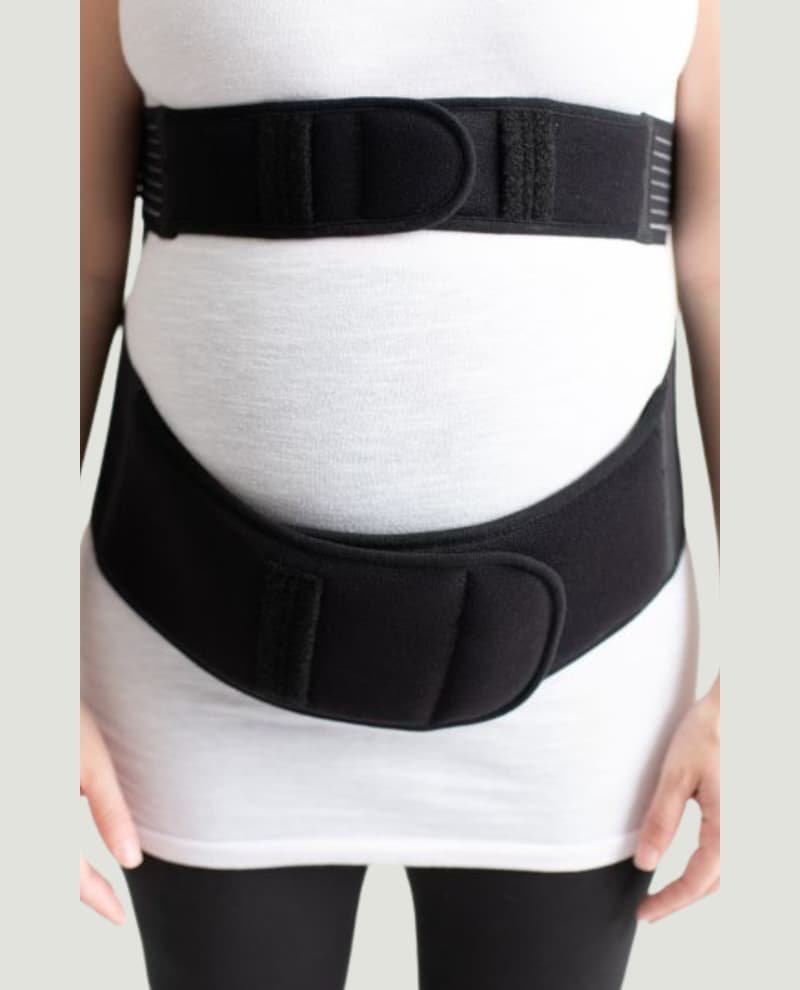
Maternity belts sit lower, under the bump, and use adjustable straps to lift upward.
Lumbar braces support the lower back itself with rigid or semi-rigid panels.
Pelvic support garments (sometimes called pelvic belts or sacroiliac belts) wrap low around the hips and apply compression across the front of the pelvis.
If you want a direct side-by-side breakdown before choosing, our comparison of maternity belt versus belly band walks through the differences in detail.
Comparison Table: Support Types at a Glance
| Support Type | Main Job | Best Stage | Watch Out For |
|---|---|---|---|
| Belly band | Holds bump close, light lift | First to early second trimester | Little lower back relief |
| Maternity belt | Lifts belly, eases back and pelvic pressure | Second and third trimester | Can slide when seated; too-tight wear adds pressure |
| Lumbar brace | Supports lower back, improves posture | Any stage, long standing days | No belly lift on its own |
| Pelvic support garment | Compresses across the pelvis for girdle pain | Late second and third trimester | Does not lift the belly; needs careful fit |
| Support kit | Belt plus lumbar support together | Third trimester | More pieces to adjust |
Matching the Support to Your Third-Trimester Day
The most useful question is not “which belt is best” but “which support fits the activity that hurts.” A common pattern among expectant mothers in the final weeks:
- Walking or standing for long stretches: a maternity belt that lifts under the bump, or a belt-plus-lumbar kit if the ache is in the lower back.
- Sitting at a desk or in a car: a lumbar cushion or rolled towel behind the lower back does more than a belt, because the belt’s lift is less useful when you are seated.
- Pelvic girdle pain (sharp groin or pubic discomfort): a pelvic support garment worn low across the hips, often alongside a maternity belt.
- Exercise or prenatal classes: a breathable belly band that stays put without restricting movement; rigid braces are usually too bulky.
- Sleep and rest: no belt. Take it off and use pillow positioning instead.
A support garment manages discomfort while it is worn; it does not treat the cause of pregnancy back pain. Match the type to the activity, and treat the belt as one tool among several.
What the Evidence Says, and What It Doesn’t
Support garments are a common choice for managing discomfort during activity, though individual results vary. Product claims about “correcting posture” or “realigning the spine” should be read skeptically. If pain is severe, one-sided, accompanied by fever, or comes with numbness or tingling, that is a reason to call your obstetric clinician rather than to buy a different belt.
How to Wear a Pregnancy Support Belt Correctly
Most discomfort from a support belt comes from wearing it wrong, not from the belt itself. Follow these steps and check the fit in a mirror the first time.
- Put the belt on over a thin layer, not directly on bare skin, to prevent chafing.
- Position the lower edge under the belly, resting on the hips, not across the bump.
- Fasten the straps snug but not tight. You should be able to slide two fingers underneath.
- Adjust the lift so the belt carries some weight, not all of it.
- Sit down and stand up. If the belt digs into your ribs or slides down, loosen and reposition.
- Wear it for daily activities and walks, then take it off to rest.
Watch out: wearing a belt too tight all day can increase pressure and discomfort.
Third Trimester Back Pain Relief Beyond the Belt
Third trimester back pain relief rarely comes from one product. It comes from stacking small habits that take load off the lower back through the day.
- Sleep on your side with a pillow between the knees to keep hips level.
- Keep the belly supported in a chair with a lumbar cushion or rolled towel behind the lower back.
- Shift weight often instead of standing still for long stretches.
- Ask your provider about safe stretches and pelvic tilts for your stage.
- Wear supportive shoes and avoid long stretches on hard floors.
A common mistake is buying a brace and expecting it to fix posture you hold for eight hours at a desk. The brace helps while it is on; the chair setup helps when it is off. If you are unsure whether a brace suits your pain, read our guidance on when a back brace for pregnancy pain helps before you order.
Check Your Insurance Coverage →
Sizing, Fit, and Safe Wear: What to Check Before You Buy
Sizing can be tricky, and in the third trimester it is a moving target. Your measurements at month seven will not match month nine, so the best garment is one you can adjust as the bump grows rather than one you buy once at a fixed size.
How to Measure and Choose a Size
Measure your hips at the widest point and your belly at its widest point, then check both against the size chart, not your pre-pregnancy size. Some expectant mothers size down out of habit and end up with a belt that digs. When you are between sizes in the third trimester, size up and rely on the adjustability. Look for:
- Adjustable straps that let you fine-tune lift as the bump grows week to week.
- Breathable fabric (mesh panels, moisture-wicking blends) for comfort during long wear and warm days.
- A low-profile profile that fits under everyday clothing if you plan to wear it at work.
- A design that stays put when you sit, since sliding is the most common complaint with maternity belts.
If you want to see the actual product and check fit details, you can view our lumbar support for mothers-to-be and compare sizes before ordering.
Safe Wear: Duration, Fit Checks, and Red Flags
Safe wear rules are simple but worth stating plainly:
- Wear the belt for activity, not around the clock. Take it off to sleep and to rest.
- Check the fit with two fingers. You should be able to slide two fingers under the straps; deep marks or numbness mean it is too tight.
- Reposition after sitting. If the belt slides down or digs into your ribs when you sit, loosen and reposition rather than tightening it.
- Stop and call your provider if you notice numbness, tingling, sharp pain, reduced fetal movement, fever, or one-sided pain that does not ease.
A support garment manages discomfort; it does not treat a medical condition. If pain is severe or changing, that is a conversation for your obstetric clinician or a physical therapist, not a reason to buy a different belt.
Care, Durability, and Wearing Under Clothing
Care instructions vary by fabric, so check the label before the first wash. Check the label before the first wash. For discreetness, look for seamless or low-profile designs if you plan to wear the support under work clothing, and consider a darker color under light fabrics.
Coverage rules and required documentation for insurance benefits vary by plan and can change. Always confirm your specific benefit with your plan or a qualified representative before relying on it.
If you are unsure whether a brace suits your pain, read our guidance on when a back brace for pregnancy pain helps before you order.
Using Tricare to Get Your Back Support and Breast Pump at No Cost
TRICARE members may be able to get a maternity back support and a hands-free breast pump through their insurance benefit.
We handle the coordination on your behalf. If you want to see the process step by step, our guide to TRICARE maternity back support coverage steps lays it out.
Watch out: coverage rules and required documentation vary by plan and can change. Always confirm your specific benefit with your plan or a qualified representative before relying on it.
Check Your Insurance Coverage for Maternity Support
To learn what your plan may cover, check your coverage directly with your insurance and provider.
You can check your coverage for maternity back support on our site.
Frequently Asked Questions
Is it okay to wear a back brace while pregnant?
Many expectant mothers wear maternity support belts and braces during the third trimester, but you should clear it with your OB or midwife first, especially if you have any complications. A properly fitted pregnancy support belt should feel supportive, not restrictive, and you should take it off if you feel numbness, tingling, or increased discomfort. Wear it for daily activities and remove it for sleep unless your doctor says otherwise.
What should I look for in a pregnancy support belt?
Look for adjustable straps, breathable fabric, and a design that lifts the belly without digging into your ribs or hips. Check available sizes against your current measurements, since your waist will keep changing in the third trimester. A belt that sits under the belly and supports the lower back tends to work well for back pain, while pelvic support bands sit lower. Ask your provider which type fits your symptoms.
Can a maternity support belt help with pelvic pressure?
A pelvic support belt sits low across the hips and can ease the pressure some women feel in the third trimester, while a belly band focuses on lifting the abdomen and supporting the lower back. The right choice depends on whether your main complaint is back pain or pelvic discomfort. Mention both to your doctor so they can recommend the type that matches your needs.
Does Tricare cover a maternity back support and breast pump?
Tricare coverage depends on your plan and your prescription. General Home Medical Supply handles the prescription coordination and insurance authorization for you, then ships your breast pump and maternity back support to your home at no charge, with free shipping. Check your coverage to confirm what your specific plan allows.
Getting a back support and a hands-free breast pump should not mean weeks of phone calls between your doctor, your plan, and a supplier. General Home Medical Supply takes that load off: we coordinate the prescription, secure the insurance authorization, and ship your breast pump and maternity back support to your home at no charge with free shipping. Get started with General Home Medical Supply and let us handle the authorization while you focus on the final weeks.
