
Last Updated: October 29, 2026
Quick Summary
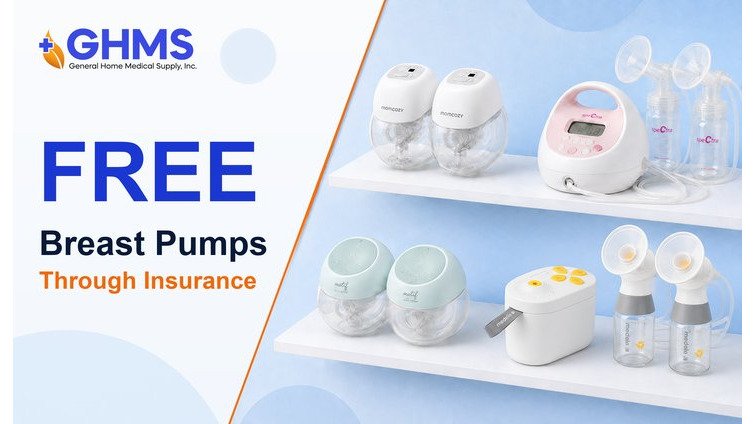
You can get a free breastfeeding pump through TRICARE by confirming your plan’s coverage and timing window, getting a prescription that documents medical necessity, and choosing a supplier who files the authorization for you. General Home Medical Supply handles the insurance authorization and ships your breast pump and maternity back support to your home with free shipping and no charge to you, subject to your plan’s coverage.
- A breast pump qualifies as durable medical equipment, so it must be prescribed by a healthcare provider.
- Most plans tie pump authorization to a window around delivery, and submitting too early can stall your order.
- A complete prescription names the personal-use double electric pump and states the medical reason with signature and date.
- We file and follow the authorization until approved, then ship your pump and back support free to your door.
- If you want features the standard covered model lacks, you may pay the difference for an upgrade.
Table of Contents
- Why a Free Breastfeeding Pump Is a Covered Benefit
- How to Get a Breast Pump Through TRICARE
- The TRICARE Breast Pump Authorization Process, Step by Step
- Choosing a TRICARE Hands-Free Breast Pump
- Getting Maternity Back Support Through Insurance
- Troubleshooting Denials and Free vs. Upgrade Models
- Check Your TRICARE Coverage With General Home Medical Supply
- Frequently Asked Questions
Why a Free Breastfeeding Pump Is a Covered Benefit
Breast pumps can be covered as durable medical equipment under some health plans when they are medically necessary. Coverage depends on your specific TRICARE plan and your provider’s documentation.
Below: how authorization works, what to expect, and how to avoid the paperwork issues that commonly delay shipments.
At General Home Medical Supply, we handle insurance authorization and ship your breast pump and maternity back support to your home, with free shipping and no charge to you, subject to your plan’s coverage.
How Insurance Coverage for Breast Pumps Works
Coverage for a breast pump runs through your health insurance plan’s durable medical equipment benefit. A breast pump qualifies as durable medical equipment, which means it must be prescribed by a healthcare provider and supplied by a durable medical equipment supplier that works with your plan.
The Affordable Care Act set the baseline here. Under the preventive services requirement from HealthCare.gov, most health plans must cover breastfeeding support and supplies without cost sharing when the plan is subject to that rule.
Three things decide your outcome:
- Medical necessity. Your provider documents why you need the pump.
- Provider network. The supplier must be able to bill your plan.
- Timing. Most plans will not process a pump order until a set window before or after delivery.
Personal-Use vs. Hospital-Grade Pumps
Personal-use pumps are the category generally associated with home use under many plans. Hospital-grade pumps are a different category; whether one is appropriate depends on your provider’s documented medical need.
If you are weighing whether to pursue a hospital-grade option, our guide on whether a hospital grade pump is worth it walks through how TRICARE treats that category.
How to Get a Breast Pump Through TRICARE
Knowing how to get a breast pump through TRICARE comes down to four steps: confirm eligibility, get a prescription, choose a supplier who handles TRICARE authorization, and wait for the approval window to open.
Eligibility depends on your specific TRICARE plan. Timing is often the part people miss, many plans have a processing window around delivery, so ordering too early can stall your order.
Eligibility and Timing for Expectant and Postpartum Members
Eligibility depends on your specific TRICARE plan and coverage details. Confirm your status with the official TRICARE source.
Timing is where denials usually start. Most plans tie pump authorization to a window around delivery, and a request submitted too early gets held rather than approved. If you are in your second or third trimester, start the paperwork now and let the supplier time the submission correctly.
The TRICARE Breast Pump Authorization Process, Step by Step
The TRICARE breast pump authorization process is a sequence of five steps, each depending on the last. Here is what happens at each stage, what documentation your provider must supply, and where orders most often stall.

- Confirm your coverage. We verify your plan details, eligibility, and timing window, including whether your TRICARE plan covers durable medical equipment and whether dependent status affects the benefit.
- Get your prescription. Your provider documents the pump as medically necessary, including your name, the specific pump type (personal-use double electric), the medical reason (breastfeeding support), and signature and date. A vague note saying only “breast pump” is a common cause of delay.
- Choose your model. You select from the hands-free pumps available under your benefit, and decide whether the standard covered model meets your needs or whether to pursue an upgrade.
- Submit for authorization. We file the request with your plan and follow it until approved. Most delays happen here when a prescription is incomplete or the submission falls outside the timing window.
- Ship to your home. Once approved, your pump and maternity back support ship free to your door.
Documentation Your Provider Needs to Supply
A complete prescription is the single biggest factor in a fast approval. Ask your provider to include:
- Your full name and date of birth
- The specific device (personal-use double electric breast pump)
- The medical necessity statement (supporting breastfeeding)
If your provider’s office uses a standard template, confirm it includes these elements before submission. A missing signature or an undated prescription sends the request back for correction.
Timing Windows and When to Start
Many plans tie pump authorization to a window around your delivery date, and submitting too early can leave a request pending. Ask your supplier and your plan to confirm the timing that applies to you.
Ordering a pump months before your due date without checking the timing window can leave you with a pending request and no pump when you come home from the hospital. Confirm the window with your supplier before submitting.
Free Standard Model vs. Paid Upgrade
Coverage for a standard personal-use pump depends on your plan. If you want a model with features the standard option lacks, you may pay the difference between the covered model and the one you want. Ask your supplier to show you the covered models first, then any upgrade options.
If Your Request Is Denied
Denials are often related to documentation, timing, or supplier billing setup. Ask for the denial reason in writing, then address that specific item with your provider or supplier.
Incomplete prescriptions are a common source of delay. To see how a supplier handles this paperwork for you, see our page on choosing a TRICARE breast pump DME supplier.
Here is the five-step authorization sequence, from confirming coverage to free home delivery.
| Step | What to do | Key detail |
|---|---|---|
| 1 | Confirm your coverage | We verify plan details, eligibility, and timing window |
| 2 | Get your prescription | Provider documents pump as medically necessary |
| 3 | Choose your model | Select from hands-free pumps under your benefit |
| 4 | Submit for authorization | We file the request and follow it until approved |
| 5 | Ship to your home | Pump and maternity back support ship free |
Choosing a TRICARE Hands-Free Breast Pump
A TRICARE hands-free breast pump is a pump you can wear without holding it in place, which matters once you are pumping several times a day. The right model comes down to a few specifications, and they matter more than brand names. Below is how to compare the options you will see under your benefit.
Check Your Insurance Coverage →
Manual vs. Electric: What TRICARE Covers
Manual pumps are hand-operated and can be tiring for frequent pumping. Electric pumps are a common category for personal use. A double electric pump lets you pump both sides at once, which can save time.
Personal-Use vs. Hospital-Grade
TRICARE covers a personal-use pump for home use. Hospital-grade pumps are a different category, typically reserved for situations where a provider documents a specific medical need, such as establishing supply or supporting a premature infant. Hospital-grade units are stronger and shared in clinical settings, but they are not the standard home benefit. If you are weighing whether to pursue a hospital-grade option, our guide on whether a hospital grade pump is worth it walks through how TRICARE treats that category.
What to Look For: Flange Size, Suction, and Closed-System Design
Flange size is an important spec. A flange that is too small or too large can cause discomfort.
Suction strength should be adjustable across a range, not fixed. Comfortable suction produces better milk supply than maximum suction.
Closed-system design keeps milk out of the tubing and motor, which matters for hygiene and for resale or recycling later.
Also check for battery operation and portability if you plan to pump away from home.
Free Base Model vs. Upgrade
Coverage for a standard pump depends on your plan. Upgrade models include features the standard option does not, and choosing one may mean paying the difference between the covered model and the one you want. Ask your supplier to show you the fully covered models first, then the upgrade options, so you can decide whether the extra features are worth the difference.
Hygiene and Safety Standards
Follow the manufacturer’s cleaning instructions for tubing, flanges, and valves, and replace parts on the schedule the manual specifies. Reusing worn valves is a quiet cause of weak suction. Starting with new equipment gives you a known starting point for cleanliness and service life.
What Happens to Your Pump After Breastfeeding
When your breastfeeding journey ends, you have options. Some pumps and parts can be recycled through local programs, and some organizations accept donations of cleaned, working pumps where allowed. Check the manufacturer’s guidance and local rules before donating or recycling, and never pass along a pump that has been used with an open-system design without confirming it can be safely cleaned.
Getting Maternity Back Support Through Insurance
Maternity back support through insurance generally involves a prescription from your provider and authorization under your plan.
The documentation is what decides it. A note that says “back pain” is weak. A note that describes the pain, when it started, and why support is appropriate is strong.
If you want to see the range of options, our guide to the best lumbar support braces for pain covers what to look for in a brace and how coverage typically works.
Maternity back support can be shipped alongside your pump, subject to your plan’s coverage.
Troubleshooting Denials and Free vs. Upgrade Models
If you are considering that route, our article on whether you can get a TRICARE breast pump upgrade explains how upgrade pricing works.
Check Your TRICARE Coverage With General Home Medical Supply
Coordination between your provider, your plan, and the supplier is often where the process slows down.
We take that coordination off your plate. General Home Medical Supply handles insurance authorization and ships your breast pump and maternity back support to your home, with free shipping and no charge to you, subject to your plan’s coverage.
Here is what that looks like in practice:
- We verify your TRICARE coverage and the timing window that applies to you
- We coordinate the prescription with your provider
- We file and follow the authorization until it is approved
You can order a breast pump with free home delivery and confirm your coverage before anything ships.
Frequently Asked Questions
Does TRICARE cover a hands-free breast pump?
TRICARE covers breast pumps as durable medical equipment when they are medically necessary, and hands-free models can qualify when they meet the plan’s requirements. Coverage depends on your specific TRICARE plan, whether you use a network supplier, and whether you have a prescription from your healthcare provider. General Home Medical Supply can help with the TRICARE breast pump authorization and ships the pump to your home, subject to your plan’s coverage.
Do I need a prescription to get a TRICARE-covered breast pump?
Yes. TRICARE generally requires a prescription or documentation of medical necessity from your healthcare provider before a breast pump is authorized. The prescription confirms the device is needed for lactation support and lets the supplier submit the claim correctly. General Home Medical Supply can coordinate with your provider on the prescription and help with the TRICARE breast pump authorization.
Can a breast pump and maternity back support be shipped to my home?
Delivery to your home may be available once your TRICARE authorization is approved, subject to your plan’s coverage. Ask about timing so your pump arrives before your due date.
What happens if TRICARE denies my breast pump claim?
A denial is usually about missing documentation, an out-of-network supplier, or a device that does not meet the plan’s criteria, not a final answer. Request the denial reason in writing, confirm your provider’s prescription includes medical necessity language, and check that the supplier is in-network. General Home Medical Supply can help review your benefits and authorization questions with your plan.
Getting a pump should not feel like a second job in your third trimester. If your authorization has stalled, or you are not sure whether your plan covers the model you want, start with a coverage check. Get started with General Home Medical Supply and let us handle the authorization, the paperwork, and the delivery so your pump arrives before you need it.
