

Last Updated: November 2, 2026
Quick Summary
Yes, you can use maternity back support after delivery. Many new mothers wear a postpartum belly band or support belt in the days and weeks after birth to ease lower back pain, support posture, and feel steadier on their feet. Wait for your doctor’s clearance after a C-section.
- Start with short stretches of wear and build up slowly over the first days and weeks.
- After a vaginal delivery, many mothers can start within the first few days if comfortable.
- Do not wear a binder to bed; your core and pelvic floor need unconstrained time.
- A good band feels snug but never pinching; you should slide a flat hand under the edge.
- At General Home Medical Supply, we handle insurance authorization and ship free.
Table of Contents
- Can I Use Maternity Back Support After Delivery?
- How Long to Wear a Postpartum Belt
- Postpartum Belly Band Safety: Fit, Warning Signs, and What to Avoid
- Postpartum Abdominal Binder After C-Section: Incision Care and Support
- TRICARE Breast Pump Coverage and Maternity Back Support
- Getting Your Maternity Back Support and Breast Pump Through Insurance
- Check Your Insurance Coverage for a Hands-Free Breast Pump and Back Support
- Frequently Asked Questions
Can I Use Maternity Back Support After Delivery?
Yes, you can use maternity back support after delivery.
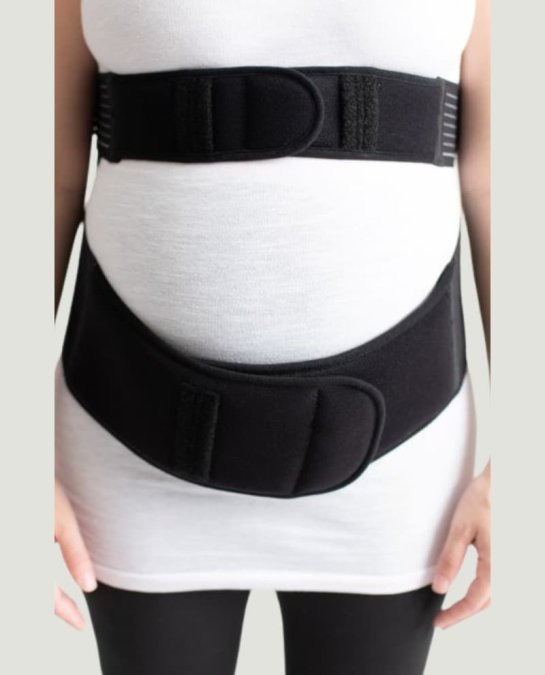
At General Home Medical Supply, we help new mothers get maternity back support and hands-free breast pumps through their insurance. We coordinate prescription and insurance authorization, then ship everything to your door.
Here is the part most guides get wrong: a pregnancy support belt and a postpartum wrap are not the same product. They fit differently, and they do different jobs. Using the wrong one can feel uncomfortable or offer little help.
This guide covers when to start wearing support after delivery, how long to wear it, safe fit, C-section care, and how TRICARE coverage works for a hands-free breast pump and maternity back support.
Maternity back support is a garment worn around the lower back and abdomen to reduce strain and support posture during and after pregnancy.
How Long to Wear a Postpartum Belt
Many mothers wear a postpartum belt for a few hours at a time, building up slowly over the first days and weeks. Start with short stretches and take it off if it feels tight or painful. There is no single schedule that fits everyone, your recovery, delivery type, and comfort level set the pace.
Wear time is usually built up gradually. Ask your doctor or physical therapist what schedule fits your recovery.
Many clinicians advise taking it off at night unless your doctor says otherwise.
Vaginal delivery vs. cesarean delivery
After a vaginal delivery, many mothers can start wearing a support band within the first few days if it feels comfortable and their clinician agrees. After a cesarean delivery, wait for your doctor’s clearance, often until the incision has begun to close and any dressing has been removed, and place the band so it does not press directly on the scar line.
Activity-specific use
- Walking: a band can help you feel steadier and reduce lower-back fatigue on longer walks. Start with short walks and loosen the band if you feel short of breath.
- Sitting: most mothers do not need a band while sitting. If you sit for long stretches, take the band off and change positions every 30 to 45 minutes.
- Sleeping: do not wear a binder to bed. Your core and pelvic floor need unconstrained time to work on their own.
- Exercise: ask your clinician before wearing a band during exercise. For most mothers, pelvic-floor physical therapy and gentle core rehabilitation matter more than external support.
How to taper off
As your core strength returns, shorten wear time rather than stopping abruptly. A common pattern is to drop one wearing session every few days and reserve the band for long walks, heavy lifting, or days when back pain flares. If pain returns when you stop, tell your doctor rather than simply wearing the band longer.
A simple rule: if you forget you are wearing it, the fit is probably right. If you are constantly aware of it, it is too tight or you have worn it too long.
For a detailed daily-wear plan, see our guide on how long to wear a postpartum belly wrap daily.
Here is how wear time and use differ by situation, based on the article’s guidance.
| Situation | Guidance | Note |
|---|---|---|
| Starting out | A few hours at a time, building up slowly | Take it off if tight or painful |
| Vaginal delivery | May start within the first few days | If comfortable and clinician agrees |
| Cesarean delivery | Wait for doctor’s clearance | Often until incision begins to close |
| Walking | Can help you feel steadier | Loosen if short of breath |
| Sitting | Most mothers do not need a band | Change positions every 30 to 45 minutes |
| Sleeping | Do not wear a binder to bed | Core and pelvic floor need unconstrained time |
| Exercise | Ask your clinician first | Pelvic-floor therapy matters more |
| Tapering off | Shorten wear time, do not stop abruptly | Drop one session every few days |
Postpartum Belly Band Safety: Fit, Warning Signs, and What to Avoid
A postpartum belly band is safe for most mothers when it fits well and you follow your doctor’s advice. The real risks come from wearing it too tight, too long, or too soon after birth.
Fit matters more than brand or price. A good band feels snug but never pinching. You should be able to slide a flat hand under the edge.
Watch out: a band that leaves red marks, makes it hard to take a deep breath, or causes numbness is too tight. Loosen it or stop using it.
Signs to stop and call your doctor:
- Sharp pain or pressure in the pelvis
- Numbness or tingling in the legs
- Shortness of breath
- Increased bleeding
- Skin breakdown or a rash under the band
Avoid wearing a binder 24 hours a day. Your core and pelvic floor need time to work on their own. Some mothers pair a band with pelvic floor physical therapy, which many doctors recommend for rebuilding strength.
For step-by-step fit instructions, read our guide on how to wear a postpartum abdominal binder.
Postpartum Abdominal Binder After C-Section: Incision Care and Support
A postpartum abdominal binder after a C-section can help support the incision area and make moving around less painful. It does not speed healing on its own, but many mothers find it easier to stand, walk, and cough with gentle compression. The key is protecting the incision and getting your clinician’s approval before you start.
Placement and pressure
- Place the binder so it sits over the dressing, not directly on a raw or open wound.
- Keep the fit loose enough that it does not rub the scar line.
- Fasten it so the pressure feels even across your abdomen, not concentrated on the incision.
- If the binder has a front panel, position it so the seam does not cross the scar.
Daily incision checks
Check the skin under the binder every day. Look for redness, swelling, warmth, drainage, or a bad smell. Stop wearing the binder and call your doctor if you see any of these signs, or if your pain gets worse instead of better.
Check Your Insurance Coverage →
When to stop wearing it
Stop and call your clinician if you notice:
- Increasing pain at the incision site
- Redness or swelling that spreads
- Drainage or pus
- Fever
- Numbness or tingling in your legs
Belly binding is not a substitute for medical care. If the incision looks infected or your pain gets worse, call your doctor right away.
Realistic expectations
A binder can make movement more comfortable, but it will not reshape your body, reposition organs, or replace pelvic-floor and core rehabilitation. Most practitioners find that gentle walking, breathing exercises, and a physical-therapy assessment do more for long-term recovery than compression alone.
Do not wear a binder 24 hours a day after a C-section. Your core and pelvic floor need time to work on their own, and constant compression can irritate the incision.
Our guide on abdominal binder after C-section explains when a binder helps and how to protect the incision.
TRICARE Breast Pump Coverage and Maternity Back Support
TRICARE covers breast pumps for new mothers, and coverage rules vary by plan and by when you gave birth. The safest step is to confirm your specific benefit with TRICARE before you order.
Under TRICARE, a breast pump is generally treated as covered medical equipment when it is medically necessary and obtained through a covered source. Hands-free pumps, which fit inside a nursing bra and let you pump without holding the bottles, are a common option for mothers who return to work or care for other children.
Maternity back support may also be covered when your doctor prescribes it. Coverage depends on your plan, your documentation, and medical need.
Two things decide whether you pay anything:
- Whether your plan covers the item
- Whether the supplier handles authorization correctly
That second point is where many orders go wrong. A missing prescription or a wrong billing code can turn a covered pump into a bill.
For the current rules, check the official TRICARE breast pump coverage information page, and confirm details with your regional contractor.
Getting Your Maternity Back Support and Breast Pump Through Insurance
The authorization process can be the hard part, and it is where we do the work for you. At General Home Medical Supply, we coordinate the prescription, handle the authorization from your insurance, and ship the breast pump and maternity back support to your home. Shipping is free.
Here is how the process works:
- You share your insurance and prescription details. We check your plan.
- We contact your doctor. We confirm the prescription and any paperwork your plan requires.
- We handle authorization. We work with your insurance to get approval.
- We ship to your home. Your pump and back support arrive with free shipping.
Coverage depends on your plan and documentation. When a plan does not cover an item, we will tell you before anything ships.
Our insurance covered maternity brace guide walks through the steps for covered maternity support.
Check Your Insurance Coverage for a Hands-Free Breast Pump and Back Support
Getting the right gear should not add stress to an already full season. If you have TRICARE and need a hands-free breast pump or maternity back support, we can check your coverage and handle the rest.
Here is what we do for you:
- Verify your insurance benefits
- Coordinate the prescription with your doctor
- Secure all authorization from your insurance
- Ship your breast pump and maternity back support to your home
- Cover the shipping at no charge
You focus on recovery and your baby. We handle the paperwork.
Get started with General Home Medical Supply and check your coverage today.
Frequently Asked Questions
How long after birth can you wear a postpartum belt?
Many people start wearing a postpartum belt within the first days or weeks after delivery, but the right timing depends on your delivery type, comfort, and your doctor’s recommendation. After a vaginal delivery, some start within a few days; after a C-section, wait until your incision has been checked and you are cleared. Start with short sessions of one to two hours and increase gradually. Stop if you feel pressure, numbness, or increased pain, and ask your OB or a physical therapist before extending wear time.
Can a maternity back support help with postpartum back pain?
A maternity back support or postpartum belly band can provide gentle compression and posture support that may ease lower back pain and pelvic discomfort after delivery. It is not a treatment for an underlying injury. Pair it with core and pelvic floor rehabilitation, safe lifting habits, and rest. If back pain is severe, persistent, or comes with numbness or weakness, see your doctor. For TRICARE members, we handle authorization and ship maternity back support and a hands-free breast pump to your home at no charge, with free shipping.
How should a postpartum support belt fit?
A postpartum belt should feel snug but not tight: you should be able to slide a hand under the band and breathe comfortably. It should sit low across the hips and lower abdomen without digging into the incision or ribs. If it rolls, rides up, or leaves red marks, try a different size or style. Proper fit matters for postpartum belly band safety, so check the sizing guide and ask your provider or a physical therapist to review placement before you wear it for long periods.
What should you do if a postpartum belt causes pain or discomfort?
Take the belt off and check the fit and position. Discomfort can come from wearing it too tight, too high, or for too long. Shorten wear time, loosen the band, and reposition it lower on the hips. If pain, numbness, tingling, or skin irritation continues, stop using it and contact your doctor or physical therapist. Never wear a binder over an uncleared C-section incision. Report any warning signs promptly and follow your provider’s guidance before resuming wear.
