

Last Updated: November 2, 2026
Quick Summary
To choose the right back support size, measure the widest point of your belly with a soft tape while standing relaxed, then match that number to the brand’s size chart, since sizing varies by company. Pregnancy changes your shape quickly, so remeasure as you move through trimesters. If you have TRICARE, General Home Medical Supply handles authorization for a hands-free breast pump and maternity back support and ships both to your home at no charge with free shipping.
- Measure the widest point of your belly with a soft, flexible tape measure.
- Stand relaxed and do not suck in your stomach or arch your back while measuring.
- Remeasure every four to six weeks in the second trimester and every two to four weeks in the third.
- When your measurement falls between two sizes, choosing the larger size usually works best for adjustable belts.
- TRICARE members can get insurance authorization handled and receive both items shipped to their home with free shipping.
Table of Contents
- Why Size Matters for Maternity Back Support
- How to Measure for a Pregnancy Support Belt
- Using a Pregnancy Belt Size Chart the Right Way
- What to Do When You Fall Between Two Sizes
- How Tight Should a Maternity Belt Be?
- How to Wear a Pregnancy Support Belt for Comfort and Support
- Booking Your TRICARE-Covered Back Support and Breast Pump
- Frequently Asked Questions
Choosing the right maternity back support size makes the difference between a brace that eases lower-back strain and one that slips, pinches, or rolls down. The fit matters more than the brand, and a correct fit starts with a simple measurement. If you have TRICARE coverage, General Home Medical Supply can handle the insurance authorization for a hands-free breast pump and a maternity back support, then ship both to your home.
Why Size Matters for Maternity Back Support
A support belt only works when it sits where it is meant to sit. If you are comparing options, our buying guide for the best maternity back support shows which models are worth considering.

Pregnancy changes your shape quickly, so a size that fit well last month may not fit now. Many people find they need a new size as they move from the second trimester into the third.
- A loose belt rolls down or shifts sideways.
- A tight belt digs in and restricts breathing or movement.
- A correct belt stays in place and spreads support evenly.
How to Measure for a Pregnancy Support Belt
Most sizing mistakes happen at the measuring stage, not at the size chart. A single number taken in the wrong spot, with the wrong tape tension, or in the wrong posture will send you to the wrong row of every brand’s chart. The method below is the one most fitters and durable-medical-equipment specialists use, and it takes about two minutes.
Before you start
- Use a soft, flexible tape measure, not a rigid ruler or a piece of string you later lay against a ruler, which stretches and reads long.
- Wear light, close-fitting clothing. A bulky sweater adds inches you will not have when the belt is on.
- Stand, do not sit. Sitting compresses the belly and shortens the measurement.
Step-by-step method
- Stand relaxed with your weight evenly on both feet. Let your arms hang at your sides. Do not suck in your stomach or arch your back, either one changes the reading by an inch or more.
- Find the widest point of your belly. This is usually at or slightly below the navel in the second and third trimesters, but it shifts as pregnancy progresses. Run your hand around your midsection and locate where the curve projects furthest.
- Wrap the tape around that point, keeping it level all the way around. Check in a mirror that the tape is parallel to the floor at your sides and your back, a tape that dips in back reads short.
- Snug the tape until it touches your skin without pressing in. You should be able to slide one finger under the tape with light resistance. If the tape leaves a mark, it is too tight; if it slides freely, it is too loose.
- Breathe out normally and read the number at the point where the tape meets its own end. Do not hold your breath or pull the tape tighter on the exhale.
- Write the number down in inches (most U.S. size charts use inches; if a chart lists centimeters, convert before comparing).
- Repeat the measurement twice more. If the three readings agree within half an inch, use the average. If they differ by more than half an inch, recheck your landmark and tape level before trusting the number.
Measure in front of a mirror. The most common error is a tape that rides up in back, which reads one to two inches smaller than the true circumference and leads to an undersized belt.
Where to measure for back support specifically
A maternity back support is not the same as a belly band, and some brands size on a different landmark. Before you measure, check which circumference the brand’s chart asks for:
- Belly circumference at the widest point, the most common sizing basis for full-panel maternity belts.
- Hip circumference, used by some lower-back and pelvic support styles that anchor below the belly.
- Waist circumference above the belly, used by a few under-bump and back-only designs.
If the chart lists more than one, measure each and match the row that uses the same landmark. Measuring your pre-pregnancy waist or your regular pants size is the single most common cause of an undersized belt, because both are almost always smaller than your current belly measurement.
When to remeasure
Your measurement will change as pregnancy progresses. A common pattern is to remeasure every four to six weeks in the second trimester and every two to four weeks in the third, or any time the belt starts to feel loose, rolls down, or needs tightening past its comfortable range.
Measuring the right landmark with the right technique is the step most likely to lead you to the correct size.
| Step | What to do | Time or frequency |
|---|---|---|
| Choose tape | Use a soft, flexible tape measure | Before starting |
| Stand relaxed | Weight even on both feet, arms at sides | Each measurement |
| Find widest point | Usually at or below the navel in trimesters two and three | Each measurement |
| Snug the tape | Touches skin without pressing in | Each measurement |
| Repeat readings | Take three readings and average them if within half an inch | Each measurement |
| Remeasure | Every 4-6 weeks in trimester two, 2-4 weeks in trimester three | Ongoing |
Using a Pregnancy Belt Size Chart the Right Way
Every brand uses its own sizing chart, so never assume a size from another company matches yours. Check the chart against your measurement, not against the size you wore before pregnancy.
- Find the row that matches your belly measurement.
- Read across to the matching size on that brand’s chart.
- Check whether the chart lists waist, belly, or hip measurements, since the wrong one leads to the wrong size.
A common mistake is measuring your regular waist instead of the widest part of your belly. A regular waist measurement is almost always smaller and leads to a belt that is too tight.
What to Do When You Fall Between Two Sizes
Landing between two sizes is common, especially in the second trimester when measurements are changing quickly. The right call depends less on the number than on how much adjustment the belt offers and how much room you need for growth. Use the decision rule below rather than defaulting to one size every time.
The default rule: size up when the belt is adjustable
For most maternity back supports, choose the larger size when your measurement falls between two rows. A belt that is slightly loose can be cinched with straps and closures; a belt that is too small has no give and will dig in as your belly grows. The larger size also buys you weeks of wear before you need to remeasure.
When to size down instead
Size down only when all three of these are true:
Check Your Insurance Coverage →
- The belt has a wide adjustment range (overlapping hook-and-loop panels or a multi-point strap system), so a larger size would run out of tightening room.
- You are early in pregnancy and expect several more weeks of growth before the belt is fully loaded.
- The brand’s chart shows the two sizes overlap at your measurement, meaning the smaller size is rated to fit you today.
Check adjustability before you decide
Adjustability is the tiebreaker. A belt with a single fixed closure and a narrow strap has little room to fine-tune, so the between-sizes decision matters more. A belt with overlapping panels, dual side straps, or a back panel that overlaps the front can absorb an inch or more of difference in either direction. Look at the product’s adjustment range, not just its size label, before choosing.
Test the fit in motion, not standing still
Whichever size you pick, test it through a full range of motion before committing:
- Sit down and stand up twice. The belt should not dig into your lap or ride up over your belly.
- Walk for two to three minutes. It should stay in place without you tugging it.
- Bend forward gently. The back panel should stay centered on your lower back, not slide up toward your ribs.
- Breathe deeply. You should be able to take a full breath without the belt restricting your ribcage.
If the larger size fails the walk test by sliding, tighten the straps; if it still slides after adjustment, the smaller size is the better fit. If the smaller size fails the breathing or sitting test, go back to the larger size.
Keep your options open
Keep the tags and original packaging until you have worn the belt through a full day of sitting, standing, and walking. Most retailers allow exchanges within a return window, and a belt that felt right for five minutes can reveal a fit problem after a few hours. If you are ordering through insurance, confirm the exchange or replacement process with your supplier before the authorization is finalized.
Between sizes? Size up if the belt is adjustable, size down only if the chart overlaps and the belt has a wide adjustment range, then test the fit sitting, walking, bending, and breathing before you commit.
If you have TRICARE, General Home Medical Supply obtains the authorization from your insurance and ships the breast pump and maternity back support to your home with free shipping, so a between-sizes exchange does not leave you managing paperwork on your own.
How Tight Should a Maternity Belt Be?
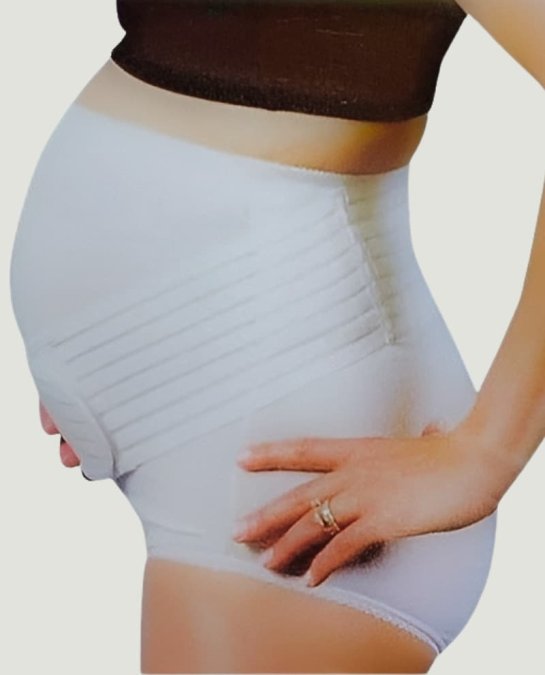
A maternity belt should feel snug and supportive, not tight. You should be able to slip one or two fingers under the edge of the belt with ease.
Signs the belt is too tight:
- Red marks or deep indentations on your skin after removing it
- Difficulty breathing deeply or sitting comfortably
- Numbness, tingling, or pain that does not go away
Signs the belt is too loose:
- It slides down or rolls up as you walk
- You feel no lift or support in your lower back
- You need to readjust it many times a day
If you have pain, numbness, or pressure that does not ease after adjusting the belt, speak with your doctor or midwife. This guide offers general information, not individual medical advice.
How to Wear a Pregnancy Support Belt for Comfort and Support
Put the belt on while standing, and position it so the lower edge sits under your belly and the top sits near the widest point of your belly. Fasten it, then adjust the straps so the belt lifts gently without pressing.
- Wear it over light clothing, not directly over a bare stomach.
- Put it on before you get up in the morning, not after you are already moving around.
- Take it off when you lie down to rest, and reapply it when you are upright again.
Watch out: wearing a belt too tight for long periods can cause discomfort. Loosen it when you sit for long stretches.
Booking Your TRICARE-Covered Back Support and Breast Pump
If you have TRICARE, you may be able to get a maternity back support and a hands-free breast pump covered by your plan. General Home Medical Supply handles the insurance authorization for you, so you do not need to manage the paperwork alone.
Once your authorization is approved, we ship both items to your home with free shipping. You can start by reading about breast pumps covered by TRICARE and TRICARE hands-free breast pump coverage. When you are ready to begin the process, our complete authorization guide explains each step, and our guide to breast pump delivery to your home covers shipping details.
Frequently Asked Questions
How do I measure for a maternity back support belt?
Use a soft measuring tape and measure around the widest part of your belly, usually at or just below the navel, while standing relaxed and not holding your breath. Write the number down in inches. Then compare it against the brand’s size chart, since sizing differs between manufacturers. If your measurement falls between two sizes, check the chart’s guidance on fit and consider how the belt’s adjustable straps will accommodate changes. Measure again later in pregnancy, because your body changes over time.
How tight should a pregnancy support belt be?
A pregnancy support belt should feel snug and supportive without restricting your breathing, causing pain, or leaving deep marks on your skin. You should be able to take a full breath and sit comfortably. If the belt rolls, pinches, or slides down, it may be too loose or positioned incorrectly. Adjust the straps gradually and recheck your comfort after walking and sitting. If you notice numbness, tingling, or persistent discomfort, stop wearing the belt and talk with your health care provider.
Should I use my pre-pregnancy size when choosing a maternity support belt?
No. Maternity support belts are designed around your belly measurement during pregnancy, not your pre-pregnancy clothing size. Your belly circumference changes across trimesters and may keep changing into the postpartum period. Always measure yourself at the time you buy the belt and compare that number to the manufacturer’s size chart. Because your measurements can shift, plan to re-measure if your fit changes noticeably.
