

Last Updated: October 26, 2026
Quick Summary
Maternity lumbar support is a belt or band worn under or over clothing to take strain off the lower back and pelvis during pregnancy. At General Home Medical Supply, we get all the authorization from your insurance, then ship your breast pump and maternity back support to your home at no charge, with free shipping.
- Match the belt to your pain pattern: lumbar pad for lower-back pain, pelvic band for SI joint pressure.
- Fasten the belt under the belly on the hips and loosen one notch from firm support.
- Insurance-covered maternity support usually requires a prescription and prior authorization before the supplier ships.
- TRICARE hands-free breast pumps follow the same path: prescription, authorization, then shipment.
- A postpartum abdominal binder offers gentle compression during recovery but is not a weight-loss device.
Table of Contents
- Finding Maternity Lumbar Support Near Me: What Actually Helps
- How a Maternity Support Belt Relieves Lower-Back and Pelvic Pressure
- Insurance-Covered Maternity Support: How Authorization Works
- Getting a Hands-Free Breast Pump Through TRICARE
- The Postpartum Abdominal Binder and Your Recovery Transition
- Safety, Wear Time, and When to Call Your Provider
- Check Your Insurance Coverage and Get Your Gear Shipped Free
- Frequently Asked Questions
Finding Maternity Lumbar Support Near Me: What Actually Helps
Searching for maternity lumbar support near me usually returns a wall of product listings and no clear answer about which one fits your body, your pain, or your insurance. At General Home Medical Supply, we handle the part most people dread: we get all the authorization from your insurance, then ship your breast pump and maternity back support to your home at no charge, with free shipping. That matters because a support belt only works when it is the right one and it arrives before you need it.
Maternity lumbar support is a belt or band worn under or over clothing to take strain off the lower back and pelvis during pregnancy. It does not cure anything, and it is not a substitute for prenatal care. What it does is redistribute weight and give your tired core muscles a break during the hours you are upright.
Below, we break down how to match a belt to your pain pattern, how to judge a local supplier, and how insurance authorization actually works.
Match the Support to Your Pain Pattern
The biggest mistake we see is buying the first belt on the shelf. Different pain needs different support.
- Lower-back pain that worsens by afternoon: a maternity support belt with an adjustable lumbar pad and firm compression.
- Pelvic pressure or SI joint pain: a lower-fitting pelvic support band that cups under the belly.
- Round ligament pulling when you stand or roll over: a soft belly band worn higher, with gentle lift rather than firm compression.
- Abdominal strain from lifting or chasing a toddler: an abdominal lift band that supports under the bump.
If you want to see what a dedicated lumbar option looks like, our lumbar support belt for pregnancy page shows the style we ship most often.
Evaluating Local Providers and Retailers
A nearby retailer is convenient for trying a fit. It is rarely the fastest route to an insurance-covered belt. Most retail pharmacies and maternity boutiques sell retail-priced products and do not bill insurance for them.
When you evaluate a supplier, ask three questions:
- Do you bill insurance directly, or do I pay and file for reimbursement?
- Do you handle the prior authorization, or do I chase my doctor and my plan?
- What is the return or exchange policy if the fit is wrong?
A supplier that answers all three clearly is worth your time. One that deflects is not.
Matching the belt to your pain pattern is the first decision, and the article breaks it down like this.
| Pain pattern | Support type | Key feature |
|---|---|---|
| Lower-back pain that worsens by afternoon | Maternity support belt | Adjustable lumbar pad and firm compression |
| Pelvic pressure or SI joint pain | Lower-fitting pelvic support band | Cups under the belly |
| Round ligament pulling when standing or rolling over | Soft belly band worn higher | Gentle lift rather than firm compression |
| Abdominal strain from lifting or chasing a toddler | Abdominal lift band | Supports under the bump |
How a Maternity Support Belt Relieves Lower-Back and Pelvic Pressure
A maternity support belt works by lifting the weight of the belly off the lower back and shifting some of it into the belt’s structure. That reduces the pull on your lumbar muscles and the downward pressure on the pelvis. It is gentle support, not a brace that immobilizes you.
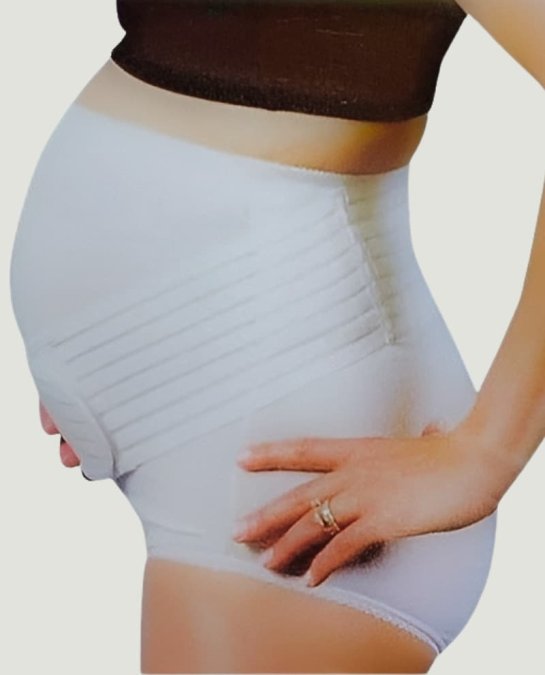
Most people feel relief within the first few days of consistent wear, mainly during the hours they are on their feet. The belt does not replace strengthening work your provider may recommend.
Fitting and Adjustment: Getting the Belt Right
Fit is where good belts fail. A belt that is too loose slides down and does nothing. One that is too tight digs into your ribs or restricts breathing.
- Fasten the belt under the belly, low on the hips, not across the bump.
- Tighten until you feel firm support with no pinching, then loosen one notch.
- Wear it over a thin layer of clothing to prevent rubbing.
- Recheck the fit every few weeks. Your body changes fast in the second and third trimester.
- Look for a secure Velcro closure and breathable material if you will wear it for hours.
A common mistake is wearing the belt too high because it feels more supportive at first. It will ride up and stop helping by mid-afternoon.
Insurance-Covered Maternity Support: How Authorization Works
Insurance-covered maternity support usually requires a prescription and a prior authorization before the supplier ships. The exact rules depend on your plan, so confirm details with your insurer. The general flow looks like this:
- Your provider writes a prescription for the support item.
- The supplier submits the prescription and clinical notes to your plan.
- Your plan reviews and issues an authorization decision.
- The supplier ships the approved item to your home.
If you want to know whether your plan requires prior authorization at all, read our guide on whether prior authorization is required for maternity support. For the full step-by-step breakdown, see our maternity support belt insurance coverage guide.
Check Your Insurance Coverage →
Watch out: skipping the authorization step and buying retail to “save time” usually means paying out of pocket for something your plan may have covered.
Getting a Hands-Free Breast Pump Through TRICARE
A hands-free breast pump through TRICARE follows the same authorization path as other covered maternity equipment: prescription, authorization, then shipment. TRICARE generally covers breast pumps for beneficiaries who are pregnant or recently gave birth, but the specific timing and documentation requirements depend on your coverage category, so verify with TRICARE directly.
The practical steps:
- Get a prescription from your provider or midwife.
- Confirm your TRICARE coverage category and any timing rules.
- Submit the prescription through a supplier that handles TRICARE authorization.
- Wait for approval, then receive the pump at home.
At General Home Medical Supply, we manage that authorization for you and ship the pump to your door at no charge, with free shipping. For the exact sequence, see our guide on getting a hands-free breast pump through TRICARE.
The Postpartum Abdominal Binder and Your Recovery Transition
Your support needs change the moment you deliver. The belt that lifted your belly is no longer the right tool. A postpartum abdominal binder provides gentle compression across the abdomen to support the core while it recovers, and many people find it helps with comfort during the first weeks.
It is not a weight-loss device and it will not “snap you back.” Think of it as temporary scaffolding while your muscles and tissues heal. Wear it as directed by your provider, and take it off for sleep unless told otherwise.
Whether a postpartum abdominal binder is covered by insurance depends on your plan and the prescription. Our article on postpartum abdominal binder insurance coverage walks through what to expect.
Safety, Wear Time, and When to Call Your Provider
Support garments are low-risk when used correctly, but they are not risk-free. Follow these general rules:
- Wear time: start with a few hours a day and build up. Take it off for sleep and for long sitting stretches.
- Skin care: check for redness, rubbing, or numbness under the belt. If you see any, loosen it or stop.
- Never wear it tight enough to restrict breathing or cause swelling in the legs.
- Call your provider if pain worsens, you develop numbness or tingling, you notice swelling, or you have contractions or reduced fetal movement.
A belt is a comfort tool, not a treatment. Any new or worsening symptom during pregnancy deserves a call to your prenatal provider, not a new product.
Check Your Insurance Coverage and Get Your Gear Shipped Free
The hardest part of getting maternity lumbar support is not choosing a belt. It is the paperwork between your provider and your insurance plan. That is the part we take off your plate.
General Home Medical Supply handles prescription coordination, insurance authorization, and billing for you. Once approved, we ship your breast pump and maternity back support to your home at no charge, with free shipping. You do not chase your doctor, your insurer, and a supplier separately.
Here is what we do for you:
- Coordinate the prescription with your provider
- Submit and follow up on insurance authorization
- Handle billing directly with your plan
- Ship to your door at no charge, with free shipping
Get started with General Home Medical Supply and let us handle the authorization while you focus on the rest of your pregnancy. Check your insurance coverage today.
Frequently Asked Questions
How do I get maternity back support through insurance?
You need a prescription from your OB or midwife plus documentation of medical necessity, then a supplier submits the authorization to your plan. General Home Medical Supply handles the prescription coordination and insurance authorization for you, then ships the maternity lumbar support to your home with free shipping. If you have TRICARE, the same process applies, and you can confirm coverage before anything ships so you are not surprised by a bill.
Can I get a hands-free breast pump through TRICARE?
TRICARE covers breast pumps for beneficiaries who are pregnant or breastfeeding, and hands-free models are available through covered suppliers. The key is using a supplier that handles the authorization and paperwork with your plan. General Home Medical Supply manages that process and ships the pump to your door at no charge to you, with free shipping. Ask about timing early in your third trimester so the pump arrives before your due date.
How should a maternity support belt fit?
A maternity support belt should sit low across the pelvis or under the belly, depending on the style, and feel firm but never restrictive. You should be able to slide a finger under the edge, breathe fully, and sit down without the belt digging in. Adjustable closures and high-compression elastic help you change the fit as your belly grows from the second to third trimester. If it leaves red marks or numbness, loosen it or ask your provider about a different fit.
When should I ask a health care provider about pregnancy back pain?
Bring up back or pelvic pain at your next prenatal visit, especially if it limits walking, sleep, or daily activity. A provider can rule out other causes and confirm whether a maternity support belt or postpartum abdominal binder fits your situation. Seek care sooner for pain with fever, numbness, weakness, or changes in bladder control. General Home Medical Supply can then coordinate the prescription and insurance authorization once your provider signs off.
