
Last Updated: October 23, 2026
Quick Summary
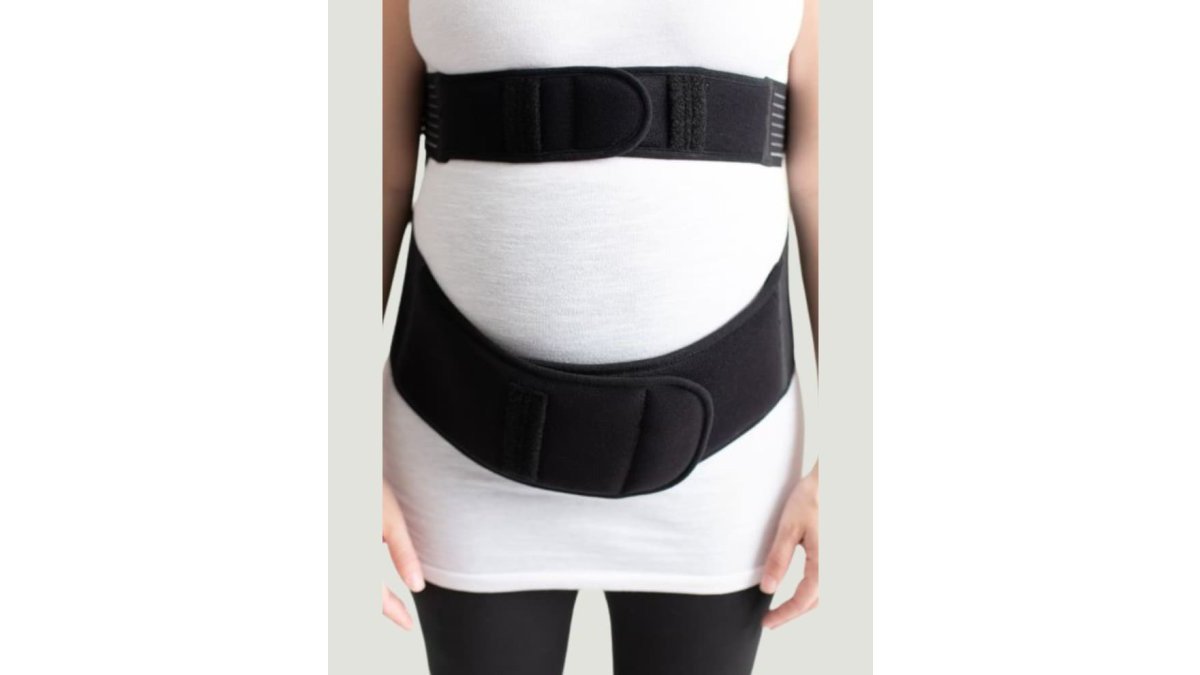
A medical grade pregnancy support belt is a maternity brace built to a clinical standard, with structured support panels, adjustable tension straps, and a fit your clinician can review. It lifts the belly from underneath to reduce strain on your lower back and pelvis. TRICARE members can get a hands-free breast pump and maternity back support shipped home at no charge, with free shipping and authorization handled for you.
- Sizing is based on waist measurement at the widest point of your belly, not pre-pregnancy clothing size.
- The support panel should sit low, under the belly, not across it.
- Many plans treat a prescribed support belt as durable medical equipment when ordered for a diagnosed condition.
- We obtain the authorization from your insurance, coordinate with your provider, and ship to your home at no charge.
- Stop wearing the belt and call your provider if you notice numbness, tingling, increased pain, or reduced fetal movement.
Table of Contents
- What Makes a Pregnancy Support Belt Medical Grade?
- How a Pregnancy Belt for Back Pain Works
- Pregnancy Support Belt Sizing: Getting the Right Fit
- Maternity Belt Insurance Coverage: What to Expect
- TRICARE Breast Pump Coverage and Maternity Support
- Materials, Comfort, and Daily Wear
- When to Talk to Your Clinician Before Wearing a Support Belt
- Getting Your Medical Grade Pregnancy Support Belt at No Cost
- Frequently Asked Questions
What Makes a Pregnancy Support Belt Medical Grade?
A medical grade pregnancy support belt is a maternity brace built to a clinical standard: structured support panels, adjustable tension straps, and a fit your clinician can review.
That difference matters in your second or third trimester, when a properly fitted maternity support belt redistributes load away from the lower back and pelvis.
How a Pregnancy Belt for Back Pain Works
A pregnancy belt for back pain lifts the growing belly from underneath and compresses the pelvis slightly, reducing strain on stretched muscles and ligaments. It doesn’t cure back pain; it changes how weight moves through your spine and abdomen.
Abdominal Support and Weight Distribution
The support panel sits under the abdomen and lifts upward, transferring part of the belly’s weight into the belt instead of your lumbar spine. Adjustable straps let you tune tension as your body changes.
Relief for Round Ligament and Pelvic Girdle Pain
Round ligament pain and pelvic girdle pain behave differently. Lower, snugger placement tends to help pelvic girdle pain by adding compression across the front of the pelvis; higher placement with more lift helps the dragging ache of round ligament strain. Our guide to maternity belts for back pain breaks down fit, wear, and insurance.
A common mistake is wearing the belt too high. The support panel should sit low, under the belly, not across it. If you feel pressure on your ribs, drop the belt an inch or two.
Pregnancy Support Belt Sizing: Getting the Right Fit
Pregnancy support belt sizing is based on waist measurement, not pre-pregnancy clothing size. Measure around your waist at the widest point of your belly and match it to the manufacturer’s size range.

Adjustability Through Pregnancy Stages
Fit changes fast in the third trimester. Look for tension straps with plenty of overlap and a size range covering two to three inches of growth; belts with stabilization rods at the back hold their shape better. Our walkthrough on how to adjust a maternity support belt for comfort covers fine-tuning.
Buying a belt sized for your current measurement only, with no adjustability, means replacing it within weeks. Check the strap overlap before you order.
Maternity Belt Insurance Coverage: What to Expect
Maternity belt insurance coverage depends on your plan, your clinician’s documentation, and whether the supplier bills insurance. Many plans treat a support belt as durable medical equipment when it’s prescribed for a diagnosed condition rather than bought for comfort.
Coverage isn’t automatic: some plans require prior authorization, others cover the belt with a doctor’s order. Read more about whether insurance covers a maternity support belt, or see our guide to getting an insurance covered maternity support belt in 2026.
| Situation | What It Usually Means | Your Next Step |
|---|---|---|
| Belt prescribed for a diagnosed condition | Often treated as covered medical equipment | Ask your supplier to verify benefits |
| Belt bought for general comfort | Usually not covered | Check plan documents first |
| Plan requires prior authorization | Approval needed before shipping | Let your supplier handle the paperwork |
| Plan has a supplier restriction | Must use a participating supplier | Confirm network status before ordering |
TRICARE Breast Pump Coverage and Maternity Support
TRICARE breast pump coverage is one of the most useful maternity benefits available, and it’s frequently underused.
The catch is paperwork.
If you’re on TRICARE and expecting, start the conversation early. The TRICARE maternity and newborn care guidance explains the covered benefit categories, and the official TRICARE breast pump benefit information covers the pump-specific rules.
The authorization, not the product, is where most TRICARE maternity orders stall. Letting a supplier handle it removes the most common reason orders arrive late.
Materials, Comfort, and Daily Wear
Materials decide whether a medical grade pregnancy support belt gets worn or ends up in a drawer. Product pages list fabric and comfort features but rarely explain how they interact with fit, skin, and daily movement.
What the materials are doing
A clinical-style maternity belt is usually built in layers, and each layer has a job:
- Inner lining against the skin. Soft, breathable, and latex-free is the baseline. Look for a smooth knit or mesh lining that wicks moisture rather than a solid foam pad, which traps heat against the belly.
- Support panel. This is the structured layer under the abdomen. It should be firm enough to lift weight but flexible enough to flex when you sit. A panel that creases sharply at the fold line will dig in after an hour of sitting.
- Outer shell and straps. The outer fabric holds tension. Nylon and polyester blends hold their shape better than cotton, which stretches out over weeks of wear. Elastic straps with generous overlap let you retension as your belly grows.
Breathability and skin comfort
You’ll wear this belt for hours, often in warm weather, so breathability isn’t a minor spec.
If you have sensitive skin or a history of heat rash under bands, choose a smooth seamless lining and wear the belt over a thin cotton layer. Latex-free construction matters if you have a latex sensitivity.
Panel width, strap attachment, and staying put
Comfort comes down to three mechanical details, not marketing language:
Check Your Insurance Coverage →
- Panel width. Narrow panels concentrate pressure and dig into the lower abdomen. Wide panels spread pressure but can feel bulky under clothing and may ride up when you sit. A mid-width panel that tapers at the sides is the common compromise.
- Strap attachment. Straps that attach at the front and cross at the back hold tension better than straps that attach only at the sides. Hook-and-loop closures with a lot of overlap let you fine-tune tension in small increments; a single wide band gives you fewer settings.
- Low-profile buckle or closure. A bulky front buckle shows through clothing and presses into the belly when you bend. A flat closure sits flush and is easier to adjust one-handed.
Washing and care
Most clinical-style belts are machine washable on a gentle cold cycle: remove the stays, close all hook-and-loop straps so they don’t snag the lining, and air dry rather than tumble dry. Heat degrades elastic, so a hot dryer costs the belt tension. Washed weekly on gentle and air dried, one belt commonly lasts through the second and third trimester.
Daily wear: how to test a belt before you commit
Wear it for daily activities first, not all day. Walking, standing at work, and light exercise are the best test: sit down in it, bend to pick something up, climb stairs. A belt that stays put through those movements will stay put through a workday.
If the belt rolls at the back or rides up when you sit, the panel is too wide for your torso or the stays are too stiff. Try removing the stays first, then check strap tension before assuming the size is wrong.
If you’re on TRICARE and expecting, the material and fit questions are the same, but the ordering path is different: we obtain the authorization from your insurance and ship the maternity back support, along with a hands-free breast pump if you need one, to your home at no charge, with free shipping.
When to Talk to Your Clinician Before Wearing a Support Belt
Most belt pages skip clinical context and leave you to guess whether a belt suits your symptoms. Here’s when a support belt helps, when it doesn’t, and how to use one without over-compressing.
Condition-specific support: three different problems
- General pregnancy back discomfort. The growing belly shifts your center of gravity forward, and the lower back muscles work harder to compensate. A support belt lifts some of that weight and reduces the load on the lumbar spine. This is the most common reason people wear one.
- Pelvic girdle pain. This is pain at the front of the pelvis or across the sacroiliac joints, often worse with walking, stairs, or turning in bed. A lower, snugger placement that adds gentle compression across the front of the pelvis tends to help. A belt worn high and loose will not.
- Round ligament pain. This is the sharp, brief pull low on one or both sides of the abdomen, often triggered by sudden movement. Higher placement with more lift under the belly can reduce the dragging ache, but the belt is supporting the abdomen, not treating the ligament.
A belt is a support device, not a treatment: it changes how weight moves through your spine and pelvis but doesn’t resolve the underlying condition. If pain is severe, one-sided, or accompanied by fever, bleeding, or reduced fetal movement, call your provider.
When a belt may not be appropriate
Talk to your clinician before wearing a support belt if you have any pregnancy complication, a history of preterm labor, or pain that worsens when you wear it. A clinician who knows your history should make that call.
Ask three questions at your next visit:
- Is a maternity support belt appropriate for my symptoms?
- What support level and placement should I use?
- Are there positions or activities I should avoid while wearing it?
Avoiding excessive compression
More compression is not better. A belt should feel like firm support, not a tight squeeze. Signs you are over-compressing include:
- Numbness, tingling, or coldness in the legs or feet
- Increased pain rather than relief
- Shortness of breath or a feeling of pressure on the ribs
If any of those appear, loosen the straps or remove the belt and call your provider. A common pattern is wearing the belt too high and too tight, which presses on the ribs and does nothing for the lower back.
Fit troubleshooting: signs the belt is failing
A belt that is working stays low, under the belly, and holds tension through sitting and walking. A belt that is failing shows predictable signs:
- Rides up when you sit. The panel is too wide or the front closure is too high. Drop the belt an inch and retension.
- Slips down when you walk. The straps are too loose or the size is too large. Check strap overlap before ordering a smaller size.
- Digs into the ribs. The belt is too high. The support panel belongs under the belly, not across it.
Stop wearing the belt and call your provider if you notice increased pain, numbness, tingling, or reduced fetal movement. Those are not fit problems to troubleshoot on your own.
Bringing the belt to your appointment
A clinician who can see the fit and placement gives far better guidance than one working from a description. Bring the belt to your next appointment, put it on the way you normally wear it, and ask whether the placement matches your symptoms.
If you’re on TRICARE, the clinical and ordering conversations can happen in parallel.
Getting Your Medical Grade Pregnancy Support Belt at No Cost
Getting a medical grade pregnancy support belt at no cost usually comes down to letting a supplier handle the insurance authorization. When a belt is prescribed and your plan covers it, the barrier is rarely eligibility, it’s the paperwork.
Here’s how we handle it at General Home Medical Supply:
- We confirm your insurance plan and coverage for the prescribed belt
- We coordinate the prescription with your clinician’s office
- We submit and follow up on the prior authorization
If you’re on TRICARE and need a hands-free breast pump alongside your maternity back support, we run both through the same process. Read more about pregnancy belly support through health insurance, then check your coverage and let us take it from there.
Frequently Asked Questions
What makes a pregnancy support belt medical grade?
A medical grade pregnancy support belt is typically constructed with materials and a design intended to provide targeted compression and lift, often including features like stabilization rods, support panels, and adjustable tension straps. These belts are usually classified as durable medical equipment and may require a prescription from your clinician. The term ‘medical grade’ generally refers to the product’s intended use for therapeutic support rather than general comfort, and it often comes with specific sizing and fit guidelines to ensure proper weight distribution across your abdomen and lower back.
Does insurance cover a maternity support belt?
Maternity belt insurance coverage varies by plan. Many insurance providers, including TRICARE, may cover a maternity support belt when it is deemed medically necessary and prescribed by your clinician. Coverage often depends on factors like your specific diagnosis, the supplier’s network status, and whether prior authorization is required. Working with a supplier that handles insurance authorization for you can simplify the process. They can verify your benefits and coordinate with your doctor to submit the necessary documentation, helping you understand your potential out-of-pocket costs before anything ships.
Can you get a pregnancy support belt through TRICARE?
TRICARE may cover maternity support belts and other medically necessary supplies when prescribed by a TRICARE-authorized provider. TRICARE breast pump coverage is also available for eligible beneficiaries, typically requiring a prescription and using a network supplier. The specific coverage and any cost-shares depend on your TRICARE plan and whether you use a network or non-network provider. Suppliers that specialize in TRICARE can help you navigate the authorization process, confirm your eligibility, and handle the paperwork so you can receive your support belt and breast pump with minimal hassle.
The hardest part of getting maternity support equipment isn’t finding the product. It’s the authorization maze between your clinician, your insurer, and the supplier. General Home Medical Supply exists to remove that step: we coordinate your prescription, secure insurance authorization, and ship your breast pump and maternity back support to your door at no charge, with free shipping. Get started with General Home Medical Supply and let us handle the paperwork while you focus on the arrival.
