

Last Updated: November 6, 2026
Quick Summary
A pregnancy support belt can help sciatica by lifting the belly’s weight off the lower back and hips, which reduces the pull on the sciatic nerve and the muscles around it. It is not a cure, and research on maternity belts for sciatica is limited, so talk with your provider about whether a belt suits your symptoms.
- Choose a belt that lifts from below, adjusts at the sides, and breathes well for all-day wear.
- Put the belt on sitting or lying down, low on the hips, snug but not tight.
- You should fit two fingers under the belt at the sides and front; if not, it is too tight.
- Wear the belt during activity and take it off during long stretches of sitting or rest.
- With Tricare, we coordinate authorization and ship your breast pump and maternity back support to your home at no charge, with free shipping.
Table of Contents
- How a Pregnancy Support Belt Eases Sciatic Nerve Pressure
- Sciatica vs. Other Pregnancy Pain: Telling Them Apart
- The Best Belly Band for Pregnancy Sciatica: What to Look For
- How to Wear a Maternity Belt for Safe, All-Day Support
- Using a Pregnancy Support Belt for Pelvic Pain and Hip Support
- Realistic Expectations and When to Call Your Provider
- Getting Your Support Belt Covered Through Tricare
- Frequently Asked Questions
How a Pregnancy Support Belt Eases Sciatic Nerve Pressure
A pregnancy support belt can help sciatica by lifting the belly’s weight off the lower back and hips. That gentle lift reduces the pull on the sciatic nerve and the muscles around it. General Home Medical Supply helps expecting mothers coordinate insurance authorization for maternity support gear, with delivery to the home.
Sciatica is nerve pain that starts in the lower back and runs down the buttock and leg. In pregnancy, it usually comes from pressure on the sciatic nerve as the belly grows and posture shifts.
Here is what a support belt actually does:
- Lifts the belly’s weight off the lower back
- Eases strain on the hips and pelvic joints
- Steadies posture as the center of gravity moves forward
- Cuts muscle tension in the lower back
What Sciatica Feels Like in Pregnancy
Sciatica in pregnancy often shows up as a sharp, shooting pain that runs from the lower back into one leg. Some women feel tingling, numbness, or a deep ache in the buttock. It tends to get worse after long periods of standing or sitting.
The American College of Obstetricians and Gynecologists notes that back pain is common in pregnancy as the body changes. A support band is one tool that some people use to ease the load. It is not a substitute for a provider’s advice.
Sciatica vs. Other Pregnancy Pain: Telling Them Apart
Sciatica is not the same as the other aches that come with pregnancy. Knowing the difference helps you pick the right support.
- Sciatica: shooting pain down one leg, often with tingling or numbness
- Round ligament pain: a sharp pull low in the belly, usually with movement
- Sacroiliac joint pain: a deep ache in the buttock or lower back, often on one side
- Pelvic discomfort: pressure or heaviness low in the pelvis
A maternity belt can help with several of these. But the fit and the position matter. If your pain is sciatica, the belt should sit low and support the belly from below.
If you are not sure which kind of pain you have, a back brace for pregnancy pain guide can help you decide whether a brace is the right next step.
The Best Belly Band for Pregnancy Sciatica: What to Look For
The best belly band for pregnancy sciatica is one that lifts from below, adjusts at the sides, and breathes well enough for all-day wear. Fit matters more than brand.
Look for these features:
- Adjustable straps so you can change the lift as your belly grows
- A low profile that sits under the belly, not across it
- Breathable fabric for comfort in warm rooms
- A wide back panel for lower-back support
- A sizing guide based on your current measurements
A common mistake is buying a belt too small. It will dig in and push the belly up instead of lifting it. Measure before you order, and size up if you are between sizes.
For a closer look at how the top options compare, our maternity back support buying guide ranks the choices by fit and support.
How to Wear a Maternity Belt for Safe, All-Day Support
Wearing a maternity belt safely comes down to position, tension, and time. Put it on over a thin layer of clothing, low on the hips, and snug but not tight. The goal is a gentle upward lift under the belly, not a tight squeeze around the waist.
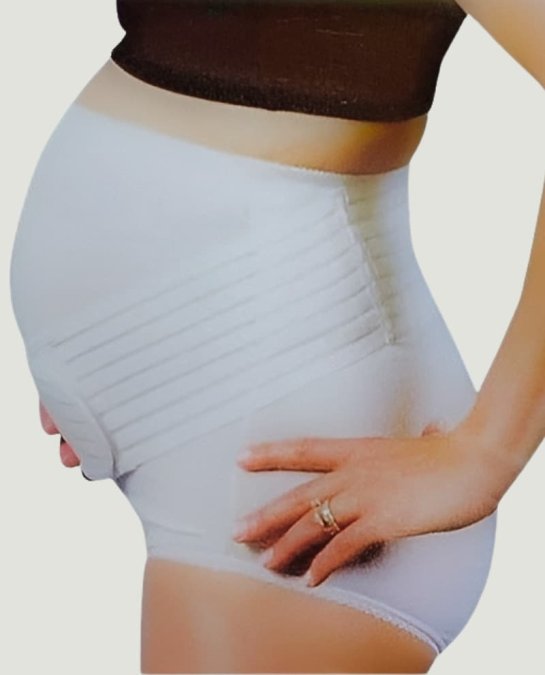
Follow these steps:
- Sit or lie down to put the belt on. Lying on your back with knees bent can make it easier to slide the band under the belly.
- Place the lower edge low, under the belly, resting on the hips or just above the pubic bone. The back panel should sit across the lower back, not up between the shoulder blades.
- Fasten the straps and tighten until you feel a gentle lift, not a clamp. You should be able to breathe fully and stand up without the belt digging in.
- Slide two fingers under the belt at the sides and front. If you cannot fit two fingers, it is too tight; if the belt slides down when you stand, it is too loose or sitting too high.
- Stand and check that the belt does not ride up when you walk or bend. If it rides up, lower the front edge and re-tighten the side straps evenly.
- Wear it during activity, walks, housework, long periods on your feet, and take it off when you sit for long stretches or rest. Ask your provider how long you should wear it at one time.
- Give your skin a rest. Wash and dry the skin under the belt, and check for redness or irritation at the edges. A thin cotton layer under the band can reduce rubbing.
Watch out: a belt worn too tight can press on the belly and make you short of breath, or cause numbness and tingling in the legs. If you feel pressure, dizziness, or numbness, loosen it or take it off and try again later. Stop using the belt and call your provider if pain worsens or you develop new symptoms.
Before you wear a belt all day, it helps to know how to choose the right maternity back support size so the fit stays safe and comfortable.
Check Your Insurance Coverage →
Here is the wear checklist the article lays out, from placement to when to take the belt off.
| Step | What to do | Note |
|---|---|---|
| Put it on | Sit or lie down, knees bent | Easier to slide under belly |
| Position | Low, under the belly, on the hips | Back panel across lower back |
| Tighten | Gentle lift, not a clamp | You should breathe fully |
| Check fit | Two fingers under sides and front | Too tight if you cannot |
| Check movement | Belt should not ride up | Lower front edge if it does |
| When to wear | Walks, housework, long periods standing | Ask provider how long |
| When to remove | Long stretches of sitting or rest | Give skin a rest |
| Warning signs | Pressure, dizziness, numbness | Loosen or take it off |
Using a Pregnancy Support Belt for Pelvic Pain and Hip Support
A pregnancy support belt for pelvic pain works by steadying the pelvic joints and taking weight off the hips. Some people find it helps with the ache that comes with walking or standing for long stretches.
The belt helps most with:
- Pelvic discomfort and heaviness
- Hip support during long days on your feet
- Lower-back support as posture shifts
- Relief from strain on the sacroiliac joint
Wear it during activity, not all day. Take it off when you sit for long periods or rest.
Realistic Expectations and When to Call Your Provider
A support belt may ease some symptoms, but it is not a cure. Results vary from person to person.
Research on maternity belts for sciatica is limited, and a belt does not change how the sciatic nerve is compressed. Talk with your provider about whether a belt is appropriate for your symptoms.
Call your provider promptly if you notice:
- Numbness or weakness in the leg that gets worse or spreads
- Pain that does not ease with rest or changes in position
- Trouble controlling your bladder or bowels, or numbness in the groin or saddle area
- A fever along with the back pain
- Any new or severe symptoms, or pain that follows a fall
These can be signs of a more serious problem. Do not wait to get checked. A belt is not appropriate for every kind of pain, and your provider can help you decide whether support wear is safe for your situation.
The National Institutes of Health advises pregnant women to talk with their care team about any new pain. A belt is one part of a plan, not the whole plan.
Getting Your Support Belt Covered Through Tricare
If you have Tricare, General Home Medical Supply can coordinate the authorization with your insurance for a hands-free breast pump and maternity back support, and ship them to your home at no charge. Shipping is free.
Here is how it works: we coordinate the prescription and insurance authorization, handle the billing paperwork, and ship the breast pump and back support to your door at no charge.
Want to know if a maternity support belt is covered by insurance? Our guide on whether a maternity support belt is covered by insurance walks through the details. If you are ready to move forward, see Tricare covered and delivered to start your order.
Frequently Asked Questions
Does a pregnancy belt help with sciatica pain?
Some pregnant women find that a pregnancy support belt may ease sciatic discomfort by lifting the weight of the belly off the lower back and pelvis. Results vary from person to person. If pain worsens or you notice numbness or weakness in a leg, stop wearing it and contact your provider.
What type of pregnancy belt is best for sciatica?
Look for a maternity belt with adjustable straps, a wide lower-back panel, and a fit that sits under the belly and across the sacroiliac area. Belts that support both the belly and the lower back tend to work better for sciatica than simple belly bands. Breathable fabric and a low-profile design help you wear it for longer stretches. Your provider or a physical therapist can suggest a style that matches how your pain presents.
How should you wear a maternity belt for sciatica?
Place the belt low, under your belly and across the hips, not high over the bump. Fasten the adjustable straps snug but not tight, then check that you can slide two fingers underneath. Wear it during activities that trigger pain, like walking or standing for long periods, and take it off to rest. Stop using it if you feel numbness, tingling, or increased discomfort, and check in with your provider.
Can a pregnancy support belt help with pelvic pain?
Yes, a pregnancy support belt for pelvic pain can stabilize the pelvis and reduce the strain that comes with round ligament pain and sacroiliac joint discomfort. Ask your provider if pain is severe or one-sided.
Getting a hands-free breast pump and a maternity back support should not add stress to your pregnancy. If you have Tricare and need this gear, we can help. General Home Medical Supply handles the prescription coordination, gets the insurance authorization, and ships both items to your home at no charge, with free shipping. Get started with General Home Medical Supply and get the support you need without the paperwork.
